 Chloe HartLast Modified: Jun 22, 2026
Customer Feedback Loop: Turn User Feedback Into Product Growth




When a product is new, user feedback feels exciting.
Someone reports a bug, suggests a feature, or shares an idea. As a founder or product builder, you read every message because each piece of feedback helps you understand what users really need.
But as your product grows, feedback starts coming from everywhere.Emails, support chats, Discord communities, social media comments, customer calls—valuable insights become scattered across different channels. Meanwhile, your team is busy fixing issues, shipping features, and supporting existing customers.
Eventually, something unexpected happens.
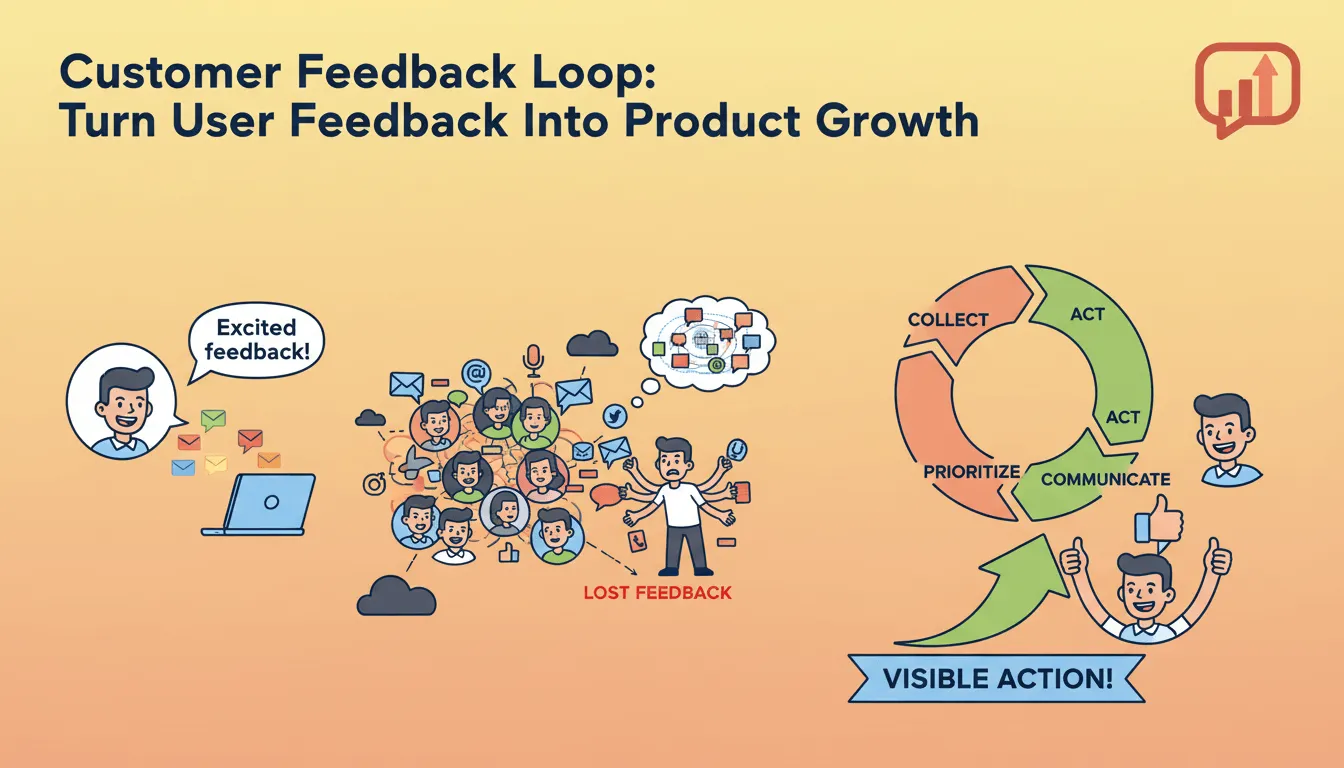
Users are still giving feedback, but the team no longer has time to respond to every suggestion or keep everyone updated on what happened next.The feedback isn't being ignored on purpose. It's simply getting lost.For users, however, the experience feels different. They spend time sharing ideas, but never know whether anyone saw them, considered them, or acted on them.
Over time, they stop contributing.
This is one of the biggest challenges for growing products. Collecting feedback isn't the problem. Turning feedback into visible action is.
That's why successful teams build a customer feedback loop—a process that ensures user feedback is collected, prioritized, acted upon, and communicated back to customers.
What Is a Customer Feedback Loop?
A customer feedback loop is a continuous process that helps product teams collect feedback, understand what users need, take action, and communicate the results back to customers.
The goal isn't simply to gather suggestions. It's to create an ongoing conversation between users and product teams, ensuring that customer insights directly influence product decisions.
At its simplest, a customer feedback loop follows four steps:
Collect → Analyze → Improve → Inform
When this cycle repeats consistently, products become more aligned with user needs, customers feel heard, and teams gain clearer direction for future development.
Traditional Customer Feedback Loops: Effective but Difficult to Scale
Traditionally, managing a customer feedback loop was a highly manual process.
Teams collected feedback from emails, support tickets, spreadsheets, community forums, and countless conversations. Product managers then reviewed requests one by one, looking for common themes and deciding what should be prioritized.
This approach can work when a product has a small number of users.
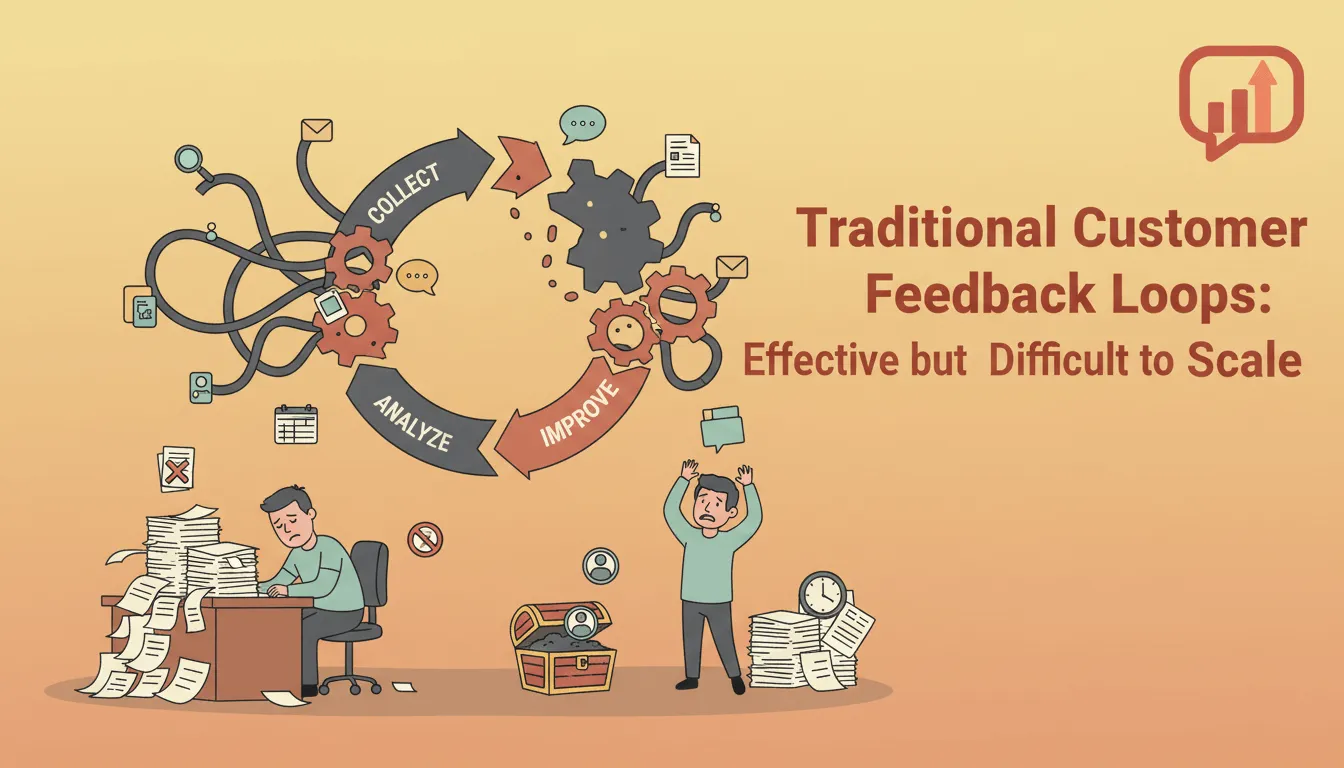
However, as the customer base grows, several challenges emerge:
- Feedback becomes scattered across multiple channels
- Duplicate requests are difficult to identify
- Valuable insights get buried in large volumes of conversations
- Teams spend more time organizing feedback than acting on it
As a result, the feedback loop often breaks before the product team realizes it. Users continue sharing ideas, but fewer of those ideas successfully make their way into product decisions.
AI-Powered Customer Feedback Loops Make Feedback Management Scalable
The rise of AI is changing how teams manage customer feedback.
Instead of manually reviewing every comment, modern feedback platforms can automatically analyze large volumes of feedback, group similar requests together, and identify recurring themes.
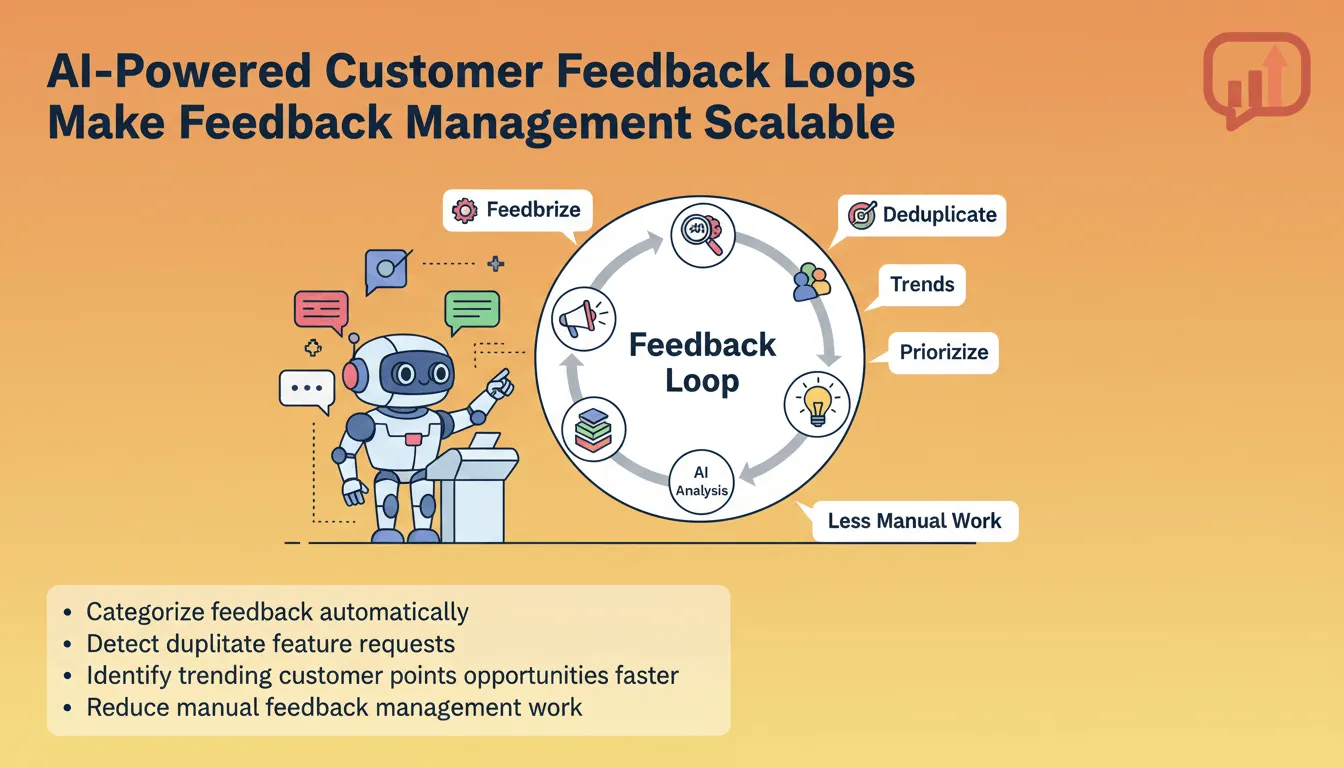
For product teams, this means less time spent sorting information and more time spent understanding what users actually need.
AI can help:
- Categorize feedback automatically
- Detect duplicate feature requests
- Identify trending customer pain points
- Surface high-impact opportunities faster
- Reduce manual feedback management work
Rather than replacing product decisions, AI helps teams focus their attention where it matters most.
As products grow, this scalability becomes essential for maintaining an effective customer feedback loop without overwhelming the team.
Modern Customer Feedback Loops Are Built Around Transparency
One of the biggest shifts in recent years isn't just automation—it's transparency.
Historically, feedback was often hidden inside internal tools, spreadsheets, and private discussions. Users could submit requests, but they rarely knew whether anyone had seen them or what happened next.
Today, modern customer feedback tools are making the process far more transparent. Instead of keeping feedback behind closed doors, many products now use public feedback boards and roadmaps that allow customers to actively participate in the product development process.
When users can see:
- Existing feature requests
- Product priorities
- Development status
- Recently shipped improvements
the entire feedback process becomes more open and collaborative.
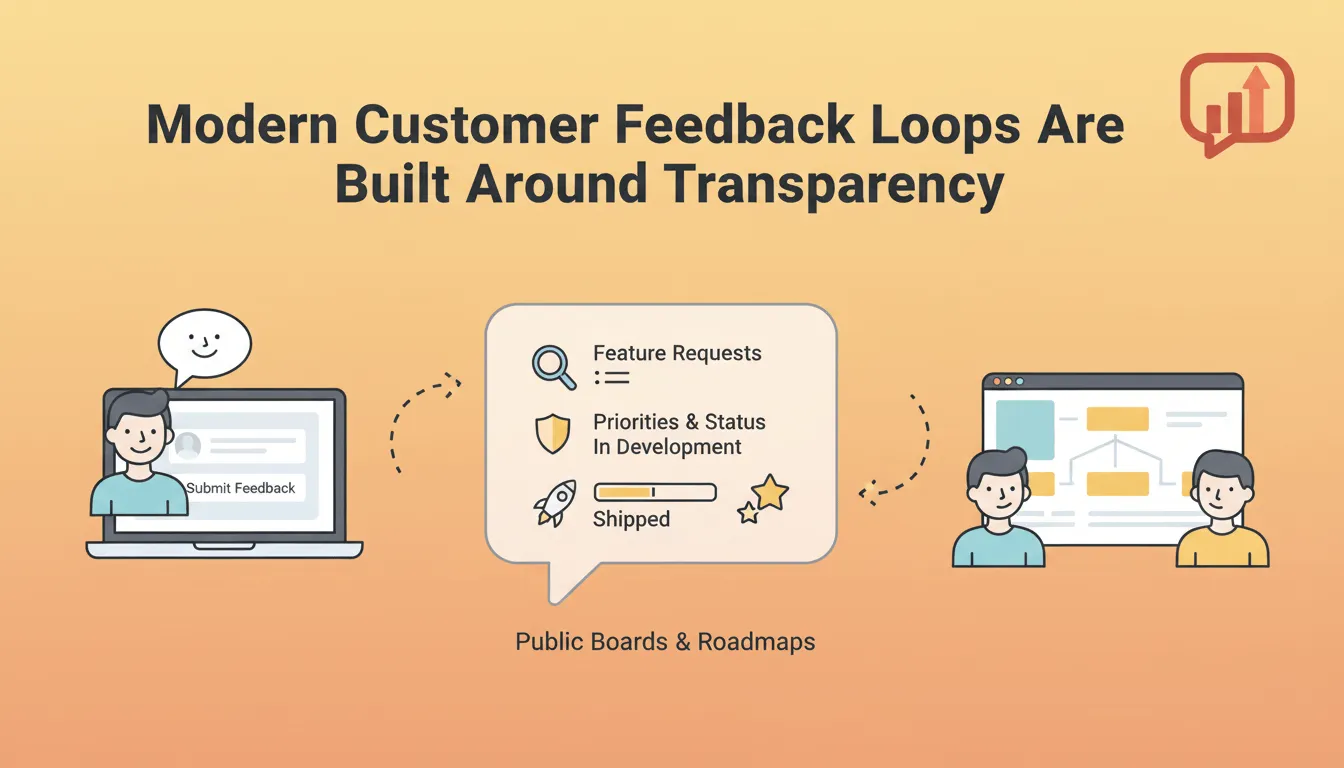
This creates value for both customers and product teams. Users gain visibility into how decisions are made and feel confident that their feedback is being considered. At the same time, teams can use a customer feedback tool to better understand customer priorities, identify recurring requests, and maintain an ongoing dialogue with their community.
In many cases, a transparent customer feedback tool does more than collect feedback. It increases engagement, encourages participation, and helps build a community of users who actively contribute to product growth.
Why Customer Feedback Loops Matter for Product Growth
Many teams think customer feedback loops are simply a way to organize feature requests.
In reality, they play a much bigger role.
A strong customer feedback loop helps teams understand what users actually need, make better product decisions, and build stronger relationships with their customers. Over time, these advantages compound and become a powerful driver of product growth.
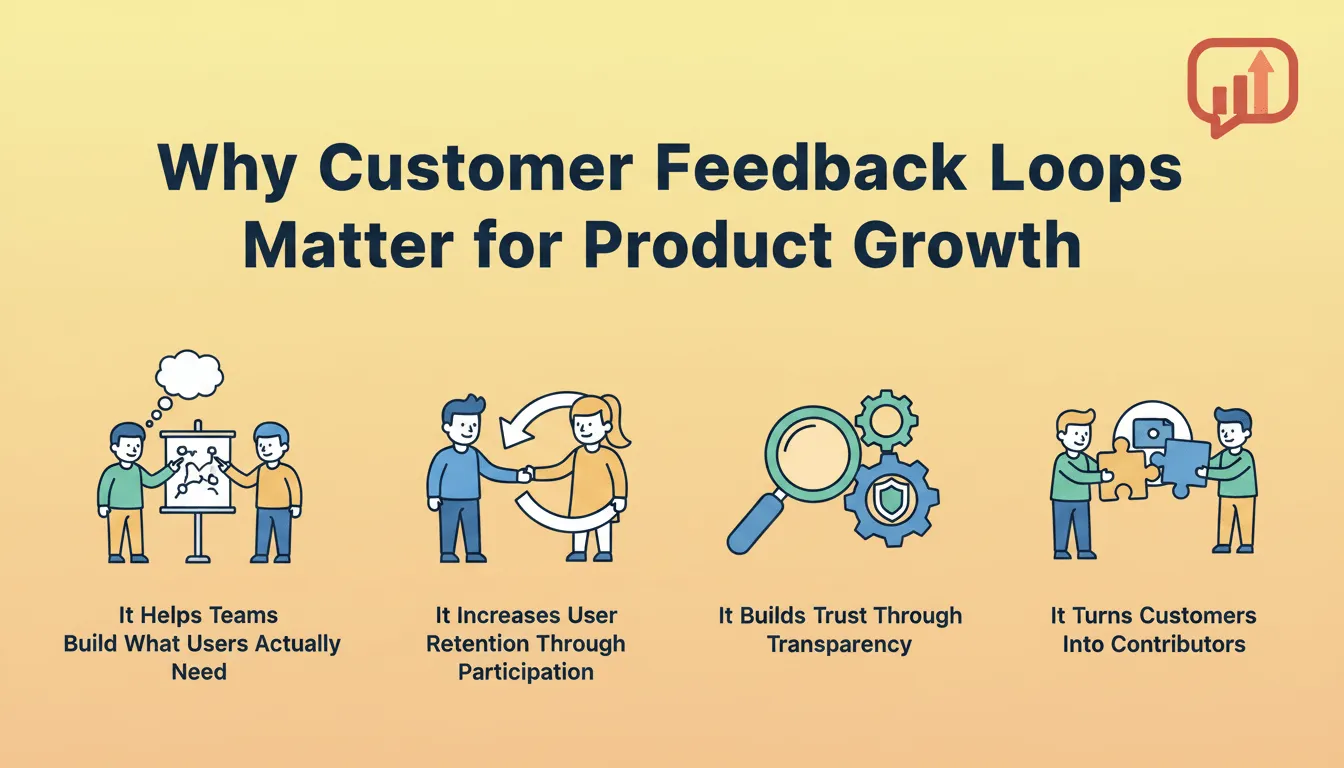
It Helps Teams Build What Users Actually Need
One of the biggest challenges in product development is deciding what to build next.
Without a structured feedback process, teams often rely on assumptions, internal opinions, or the loudest customer voices. This can lead to months of development effort being invested in features that have little impact on user satisfaction.
A customer feedback loop changes that dynamic.
Instead of guessing, teams can identify recurring requests, validate real customer pain points, and prioritize improvements based on actual demand. The result is a product roadmap that reflects what users genuinely care about, not what the team assumes they want.
When products consistently solve real customer problems, growth becomes much easier to achieve.
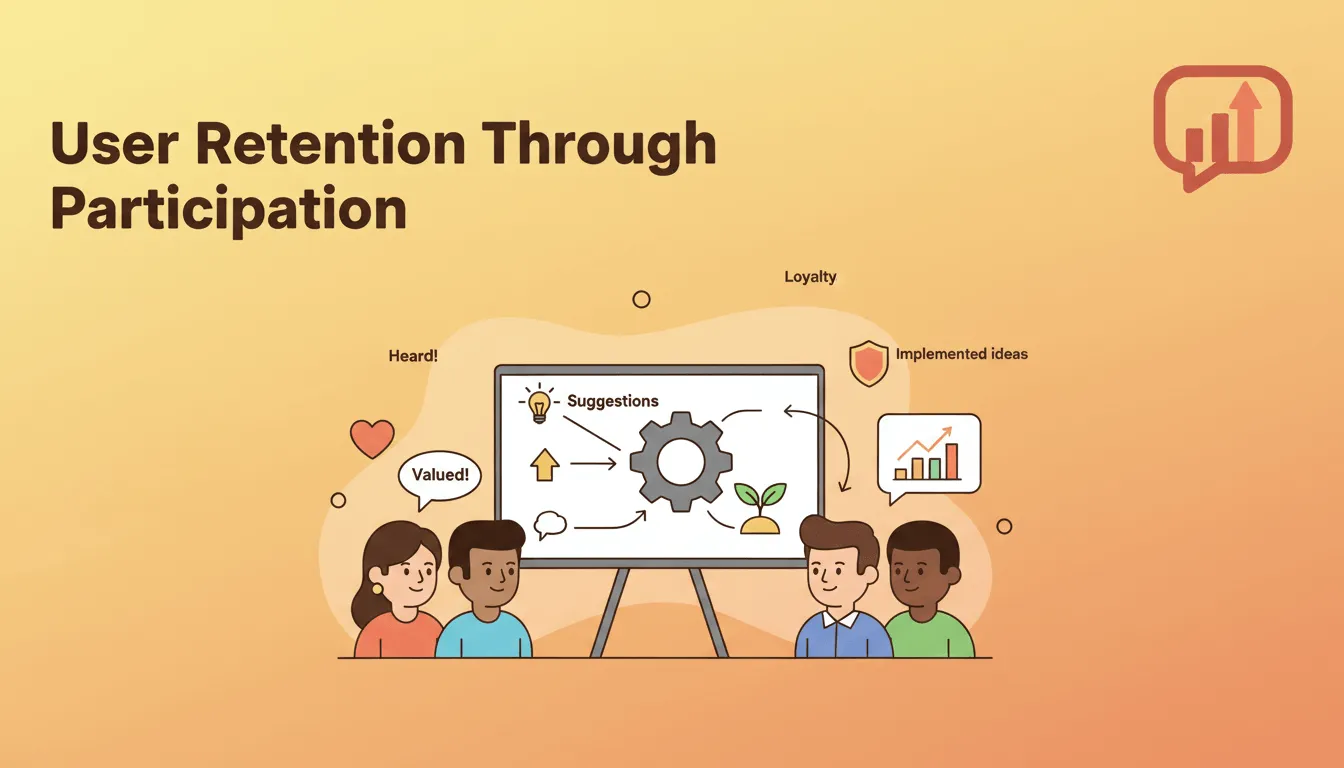
It Increases User Retention Through Participation
Users are more likely to stay engaged when they feel their voice matters.
When someone submits a suggestion and later sees that idea discussed, prioritized, or even implemented, they develop a stronger connection to the product. They are no longer just users—they become active participants in the product's evolution.
This sense of involvement creates a powerful effect. Customers feel heard, valued, and invested in the product's success.
As a result, feedback loops don't just improve products; they help strengthen customer loyalty and long-term retention.
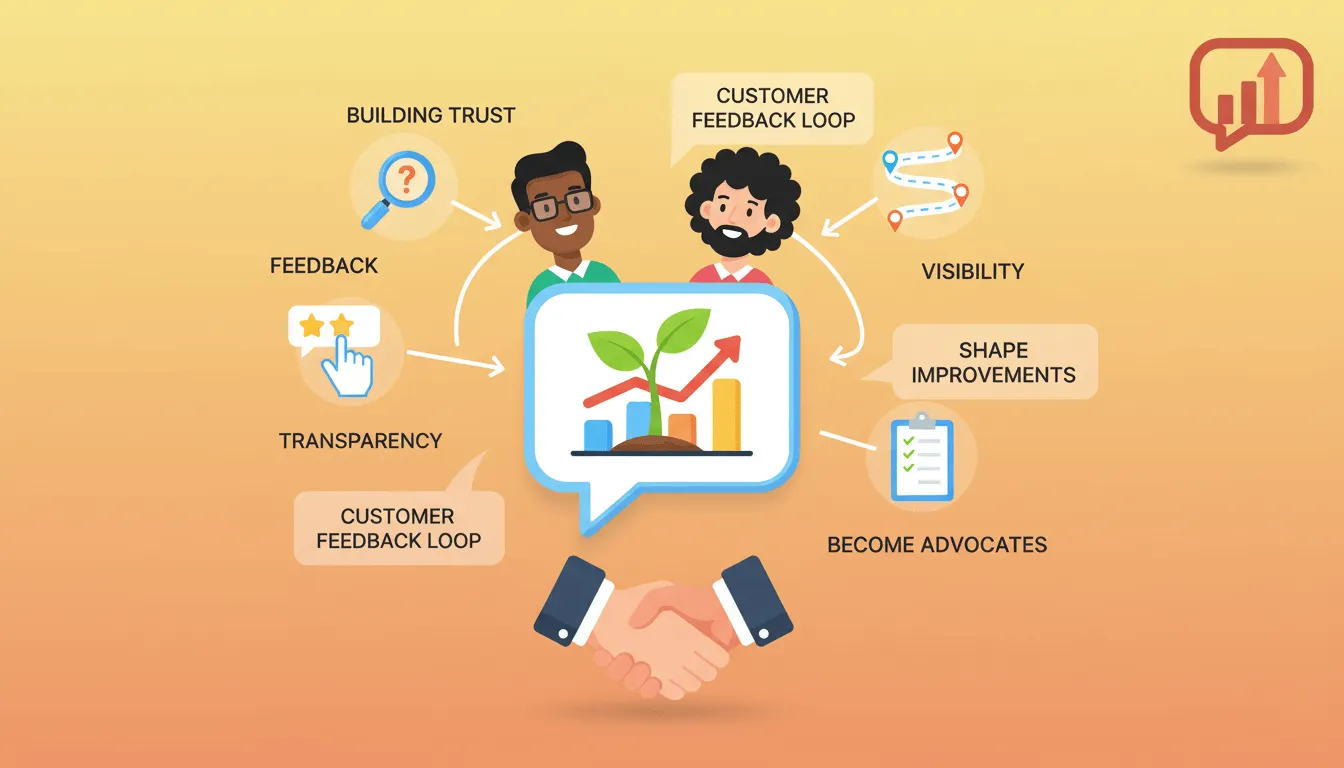
It Builds Trust Through Transparency
Many users don't expect every suggestion to be implemented.
What they do expect is visibility.
They want to know whether their feedback has been received, whether the team is considering it, and what progress is being made.
A transparent customer feedback loop provides those answers.
Public feedback boards, voting systems, product roadmaps, and status updates allow customers to see how decisions are made and where their requests stand. Even when a feature isn't immediately approved, clear communication helps users understand the reasoning behind product decisions.
Transparency transforms feedback from a one-way submission process into an ongoing conversation, helping teams build trust with their community over time.
It Turns Customers Into Contributors
The most successful products don't grow because teams work in isolation. They grow because customers actively contribute ideas, identify problems, and help shape future improvements.
A customer feedback loop creates the structure that makes this possible.
When users can share feedback, support ideas from others, and track product progress, they become part of the development journey. Their participation generates valuable insights, encourages community engagement, and often leads to better product decisions.
In many cases, customers become more than users—they become advocates.
And when customers are invested in a product's success, product growth becomes a shared effort rather than a one-sided process.
How Small Teams Can Build a Customer Feedback Loop Without Extra Overhead
As we explored different ways to build a customer feedback loop, we noticed a common pattern.
Many feedback management platforms offer powerful features, advanced workflows, and extensive customization options. These capabilities can be valuable for large organizations with dedicated product managers, customer success teams, and established processes.
However, small teams often face a very different reality.
At an early stage, the goal isn't managing thousands of feature requests. The goal is understanding users, validating product direction, and improving fast enough to keep customers engaged.
When you're still trying to find product-market fit or grow your first group of loyal users, complex workflows can become a distraction rather than an advantage. High subscription costs, lengthy setup processes, and feature-heavy interfaces create additional overhead for teams that are already stretched thin.
Small teams don't need more process.
They need a simple way to listen, learn, and iterate alongside their users.
FeedLog Was Built Around Simplicity
That's the reason we built FeedLog.
Not because feedback collection is difficult, but because maintaining a customer feedback loop often becomes harder as products grow.
Feedback starts appearing everywhere—emails, support conversations, community discussions, social media messages, and customer calls. Even when teams genuinely care about user feedback, keeping everything organized quickly becomes challenging.
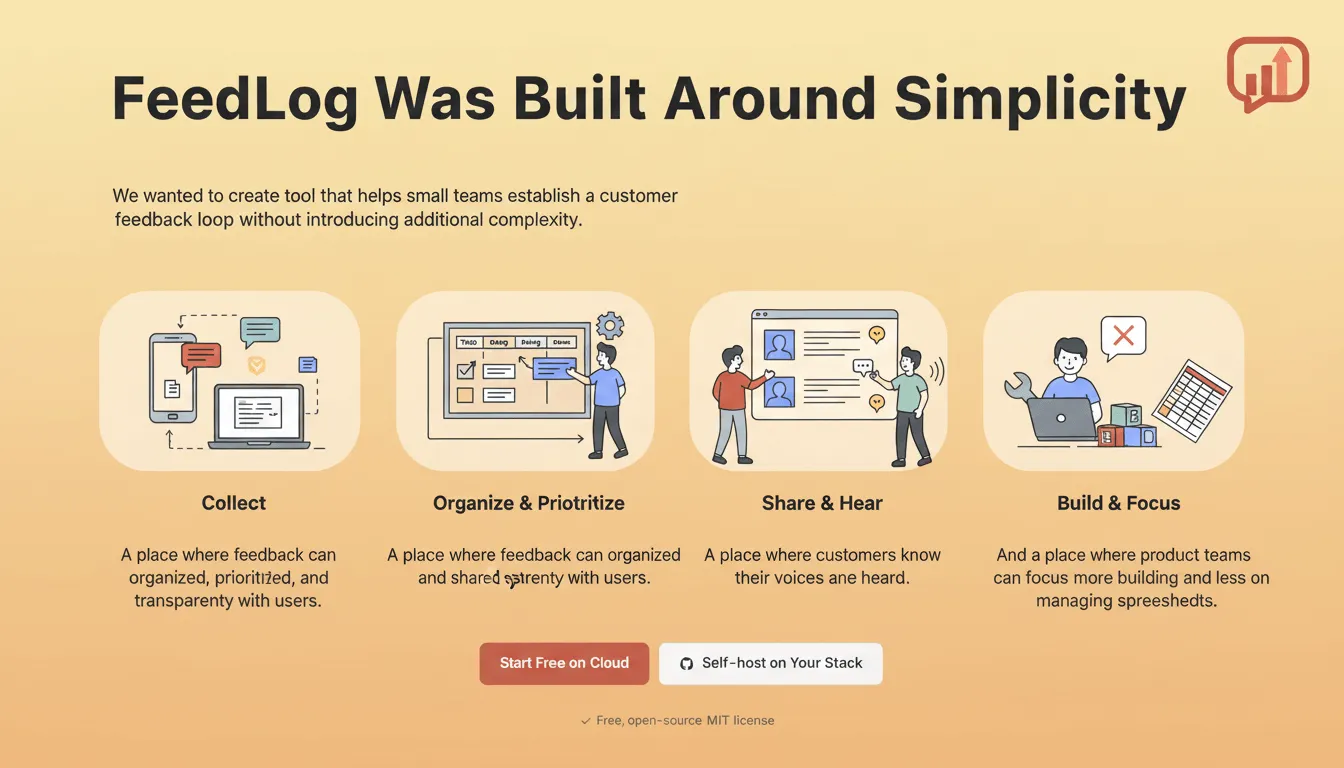
We wanted to create a tool that helps small teams establish a complete customer feedback loop without introducing additional complexity.
A place where feedback can be collected, organized, prioritized, and shared transparently with users.
A place where customers know their voices are being heard.
And a place where product teams can focus more on building and less on managing spreadsheets.
Open Source or SaaS, Choose What Fits Your Team
Every team works differently.
Some teams prefer complete ownership of their infrastructure and want to self-host their feedback platform. Others simply want to start collecting feedback immediately without worrying about deployment, maintenance, or updates.
That's why FeedLog is available in both open-source and SaaS versions.
Both versions provide the same core experience and are designed to help teams build an effective customer feedback loop. The difference is simply how you choose to deploy and manage it.
Whether you prefer self-hosting or a fully managed solution, the goal remains the same: helping teams stay connected to their users and make better product decisions.
Get Started in Minutes, Not Days
For many small teams, speed matters.
The longer it takes to set up a feedback system, the more likely it is to be postponed while other priorities take over.
The SaaS version of FeedLog is designed to remove that friction.
Instead of spending hours configuring infrastructure or managing deployments, teams can start collecting feedback in about five minutes. This makes it easier to establish a customer feedback loop early, when understanding user needs is often most critical.
Designed to Feel Like Part of Your Product
One challenge we frequently heard from teams was that many feedback tools felt disconnected from their products.
Users would click a feedback button and suddenly find themselves on a completely different website with different branding and a different experience.
We wanted to make the transition feel seamless.
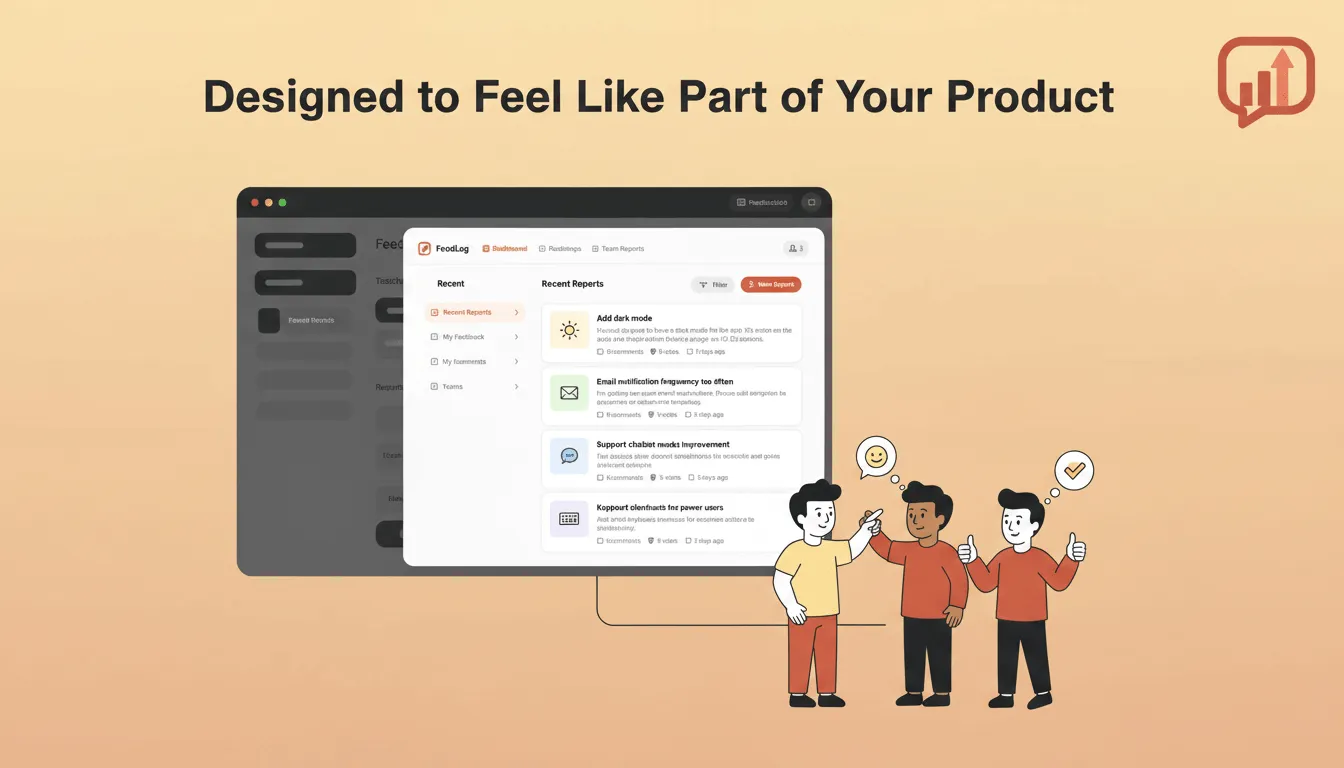
FeedLog supports custom logos and brand color customization, allowing teams to align their feedback portal with the look and feel of their product. Rather than appearing as an external tool, the feedback experience becomes a natural extension of the product itself.
Because the best customer feedback loop is one that feels effortless—for both the team managing it and the users contributing to it.
Customer Feedback Loops Are About More Than Feedback
Collecting customer feedback isn't valuable simply because more feedback is being collected.
It's valuable when users can see that their ideas lead to conversations, decisions, and improvements.
That's what a customer feedback loop is really about—not just collecting customer feedback, but creating a process that turns customer insights into product growth.
For small teams, this doesn't need to be complicated.
The best feedback systems are often the simplest ones: collect customer feedback, understand what matters most, keep users informed, and repeat.
That's the approach behind FeedLog.
Whether you choose the open-source version or the SaaS version, the goal is the same: helping small teams streamline the process of collecting customer feedback while building a customer feedback loop that keeps users engaged and products moving in the right direction.