 Chloe HartLast Modified: Jun 5, 2026
Feedback Management Is Broken for Most Product Teams




Product teams today have more user feedback than ever before.
But most teams still struggle with feedback management.
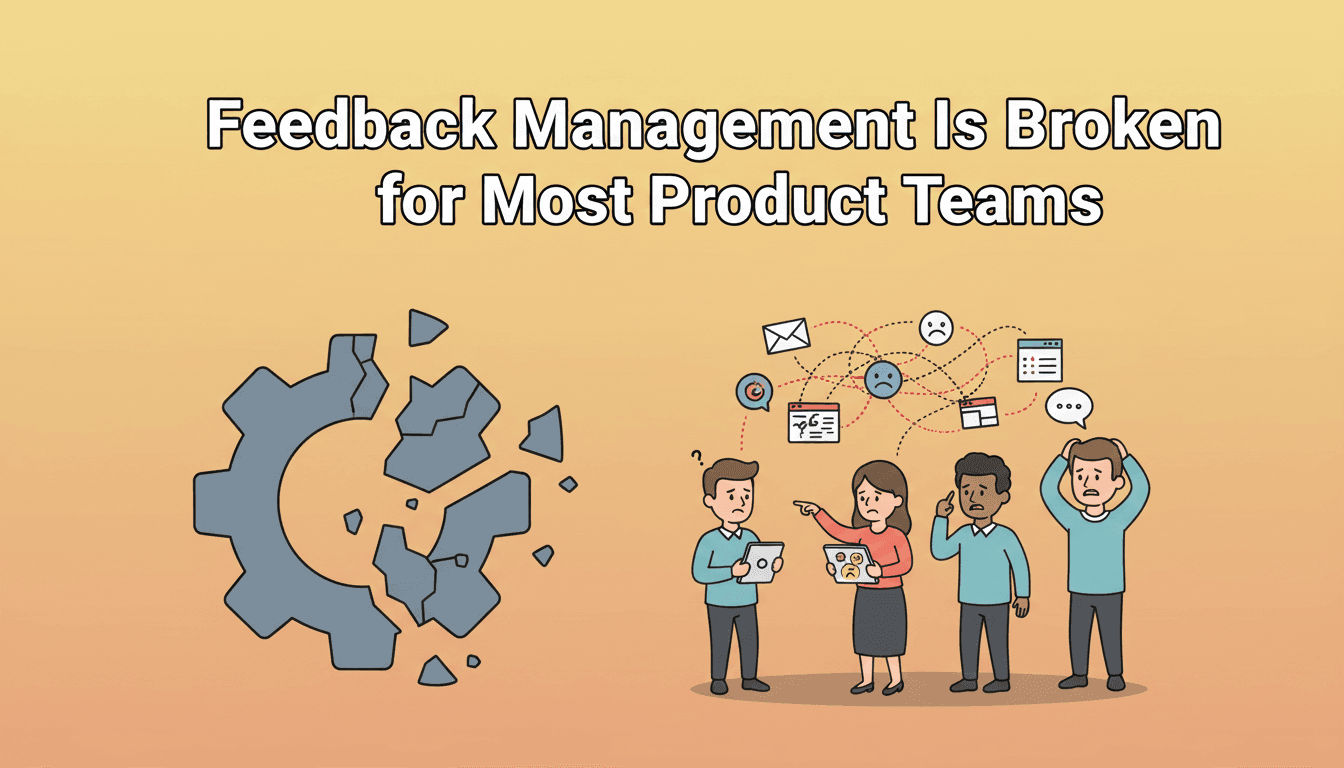
Feedback comes from everywhere:
- Discord communities
- Emails
- Product reviews
- Social media comments
- Support tickets
- Feature request forms
At first, this feels manageable.
But as products grow, the entire process quickly becomes chaotic.
One customer asks for a feature in Discord.Another reports a bug through email.
A power user sends detailed suggestions through DMs.Meanwhile, product managers try to organize everything inside spreadsheets.
Eventually, feedback gets lost.
This is the hidden problem many startups face today. They believe they are listening to users because they collect feedback. But collecting feedback alone is not enough. Real feedback management means understanding feedback, organizing it, prioritizing it, responding to users, and turning it into product decisions. Without a proper system, valuable user insights slowly disappear inside daily operations. That is why more startups are starting to rethink how modern feedback workflows should work.
Feedback Is More Than Feature Requests
Feedback management is more than collecting feature requests
Many teams assume user feedback simply means storing requests in one place.
But modern product teams need much more than that.
A strong workflow usually includes:
- Collecting feedback
- Organizing feedback
- Detecting patterns
- Prioritizing requests
- Updating users
- Tracking product decisions
- Building a feedback loop
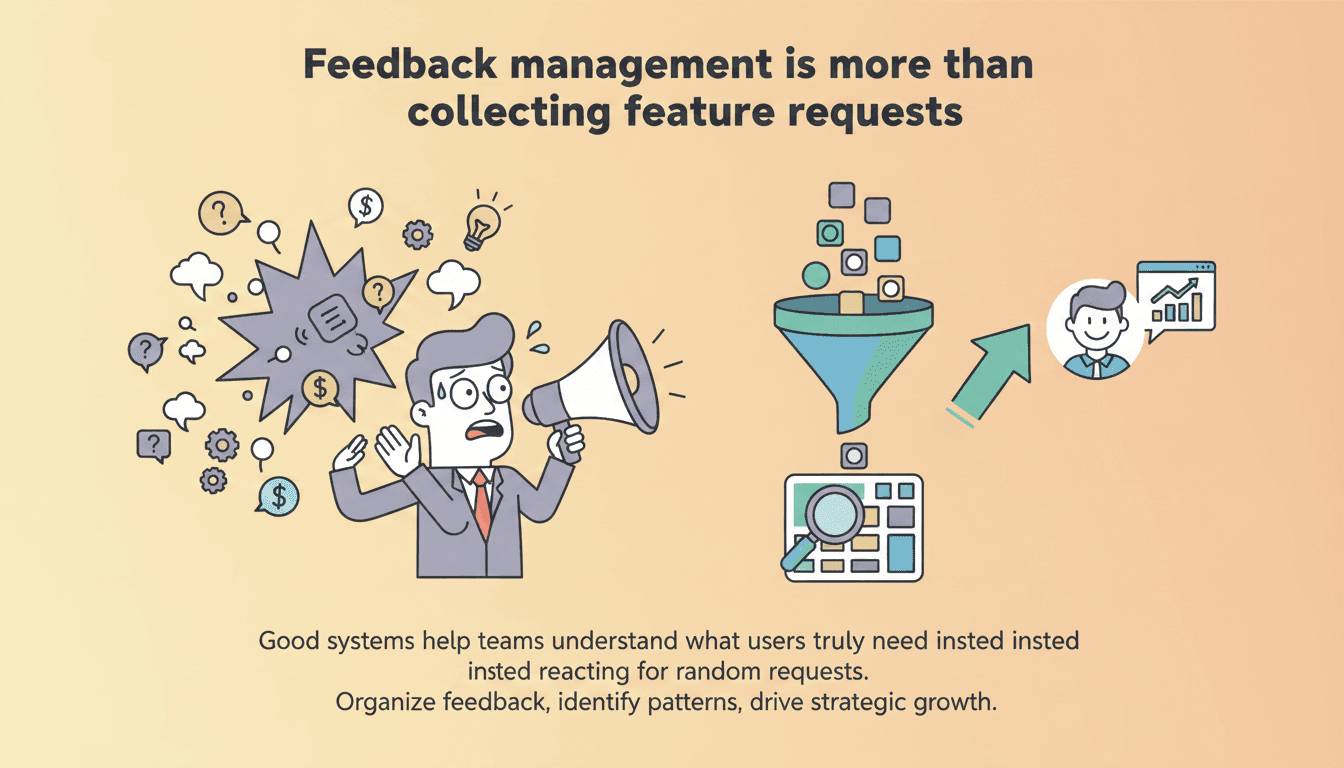
Good systems help teams understand what users truly need instead of reacting to random requests. For example, imagine a SaaS company receiving hundreds of feature requests every month. Without a structured process, the loudest users often get the most attention, and product decisions become emotional instead of strategic. But when a customer feedback tool is used to properly organize and analyze input, teams can identify patterns across multiple users and discover which problems actually matter. That directly impacts product growth.
Votes Alone Rarely Tell the Full Story
Many people think feature voting boards solve the problem.
In reality, votes alone rarely provide enough context.
Some users never vote. Some users only vote for personal preferences. And sometimes the most important product problems are not the most visible ones.
The real goal is not counting votes. It is understanding the patterns behind user behavior.
For example, ten users asking for different features may actually be describing the same underlying issue. Without clear visibility, teams often focus on surface-level requests instead of the real problem.
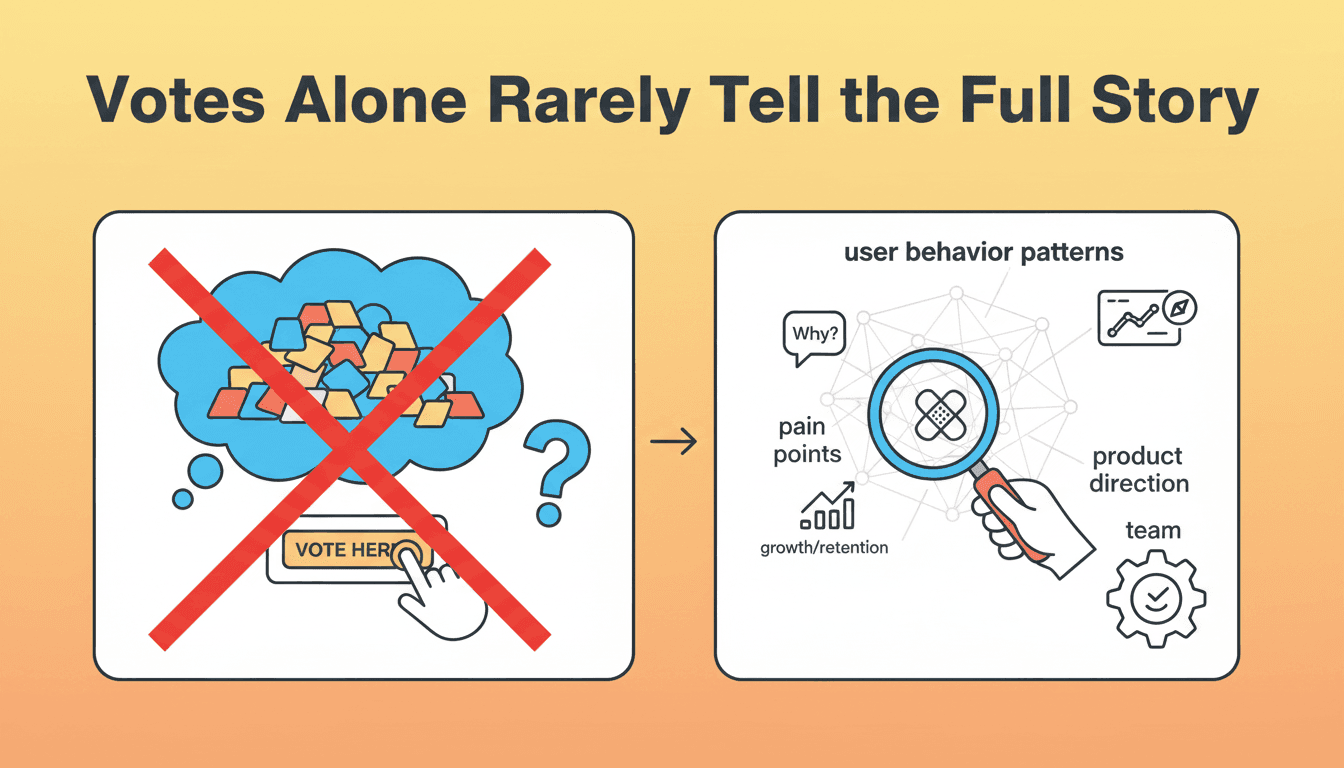
Voting can still be useful, but growing products also need to understand:
- Why users are requesting something
- What pain points appear repeatedly
- Which problems affect retention or growth
- Which requests align with product direction
The goal of feedback management is not to build every requested feature.
It is to help teams make better product decisions with clearer user insights.
Why Things Break as Products Grow
Early-stage startups often manage feedback manually.
In the beginning, founders remember every customer conversation. They reply personally to every email and every message.
But growth changes everything.
As the user base expands, the amount of feedback increases rapidly. Suddenly, teams realize their old feedback management process no longer works.
One common example is Discord.
Many startups build active communities on Discord because users love fast communication. But Discord quickly becomes difficult for long-term source of product insight.
Important feature requests disappear inside long conversations. Bug reports become impossible to track. Valuable product discussions are buried under memes and general chat.
The same thing happens with Slack, email, and spreadsheets.
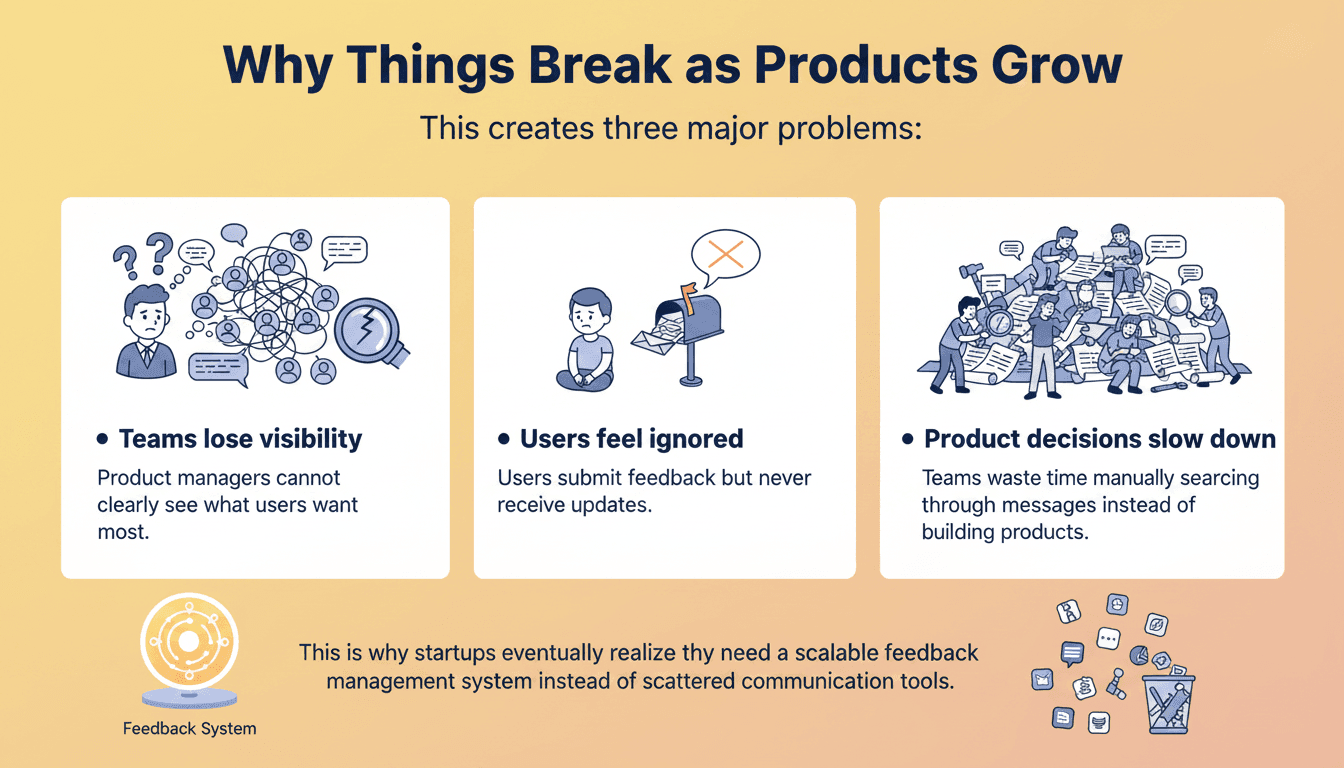
Once feedback becomes fragmented across different tools, teams start facing three major problems:
- Teams lose visibility
Product managers cannot clearly see what users want most.
- Users feel ignored
Users submit feedback but never receive updates.
- Product decisions slow down
Teams waste time manually searching through messages instead of building products.
This is why startups eventually realize they need a scalable feedback management system instead of scattered communication tools.
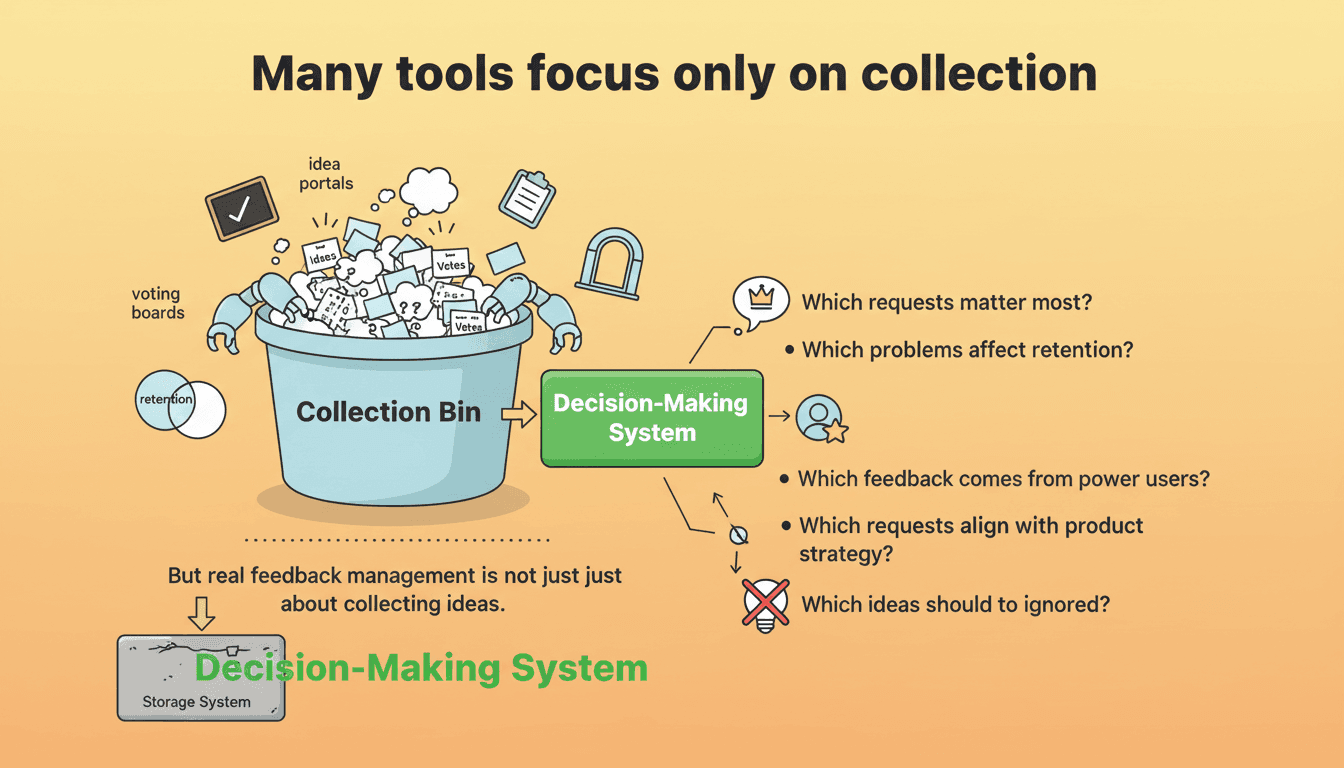
Why Many Tools Still Fail
Many tools focus only on collection
Ironically, even some modern feedback management tools still fail to solve the real problem.
Most tools focus heavily on collecting feedback.
They provide voting boards, forms, or idea portals.
But real feedback management is not just about collecting ideas.
The real challenge starts after feedback is submitted.
Questions product teams face every day include:
- Which requests matter most?
- Which problems affect retention?
- Which feedback comes from power users?
- Which requests align with product strategy?
- Which ideas should be ignored?
Without answering these questions, feedback management becomes another storage system instead of a decision-making system.
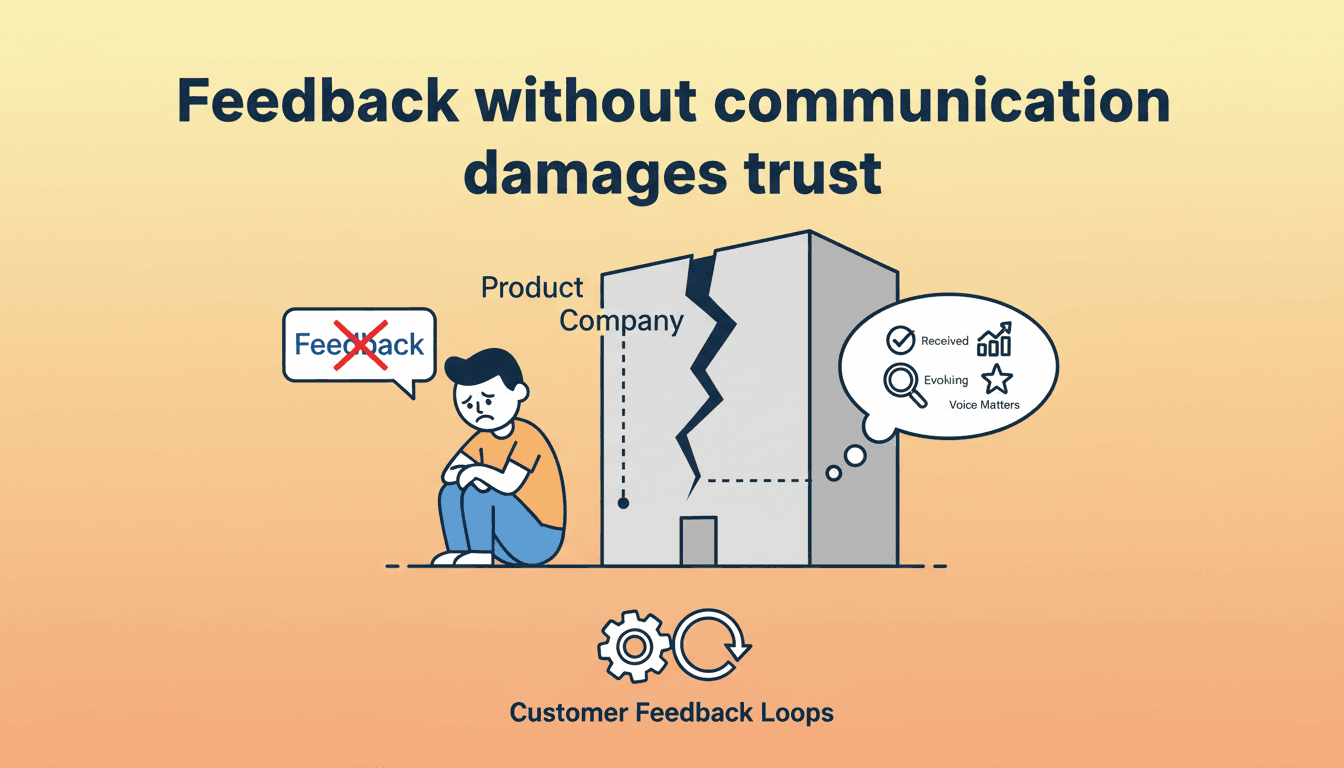
Feedback without communication damages trust
Another major problem in modern feedback management is silence.
Many users submit feedback and never hear back again.
This creates a terrible experience.
Imagine spending time writing detailed feedback about a product problem, only to receive no update for six months.
Eventually, users stop contributing.
The best product companies understand something important:
Users do not expect every request to be accepted.
But they do expect transparency.
They want to know:
- Their feedback was received
- The team reviewed it
- Product direction is evolving
- Their voice matters
This is where customer feedback loops become extremely important.
What Is a Customer Feedback Loop?
Feedback should become continuous product improvement
A customer feedback loop is the process of continuously learning from users and improving products based on those insights.
A simple feedback loop looks like this:
Collect → Analyze → Prioritize → Build → Respond → Improve
Strong workflows help helps teams move through this cycle faster and more clearly.The biggest difference between basic tools and modern feedback management systems is whether they help teams close the loop.Many companies collect feedback.
Very few actually respond to users consistently.
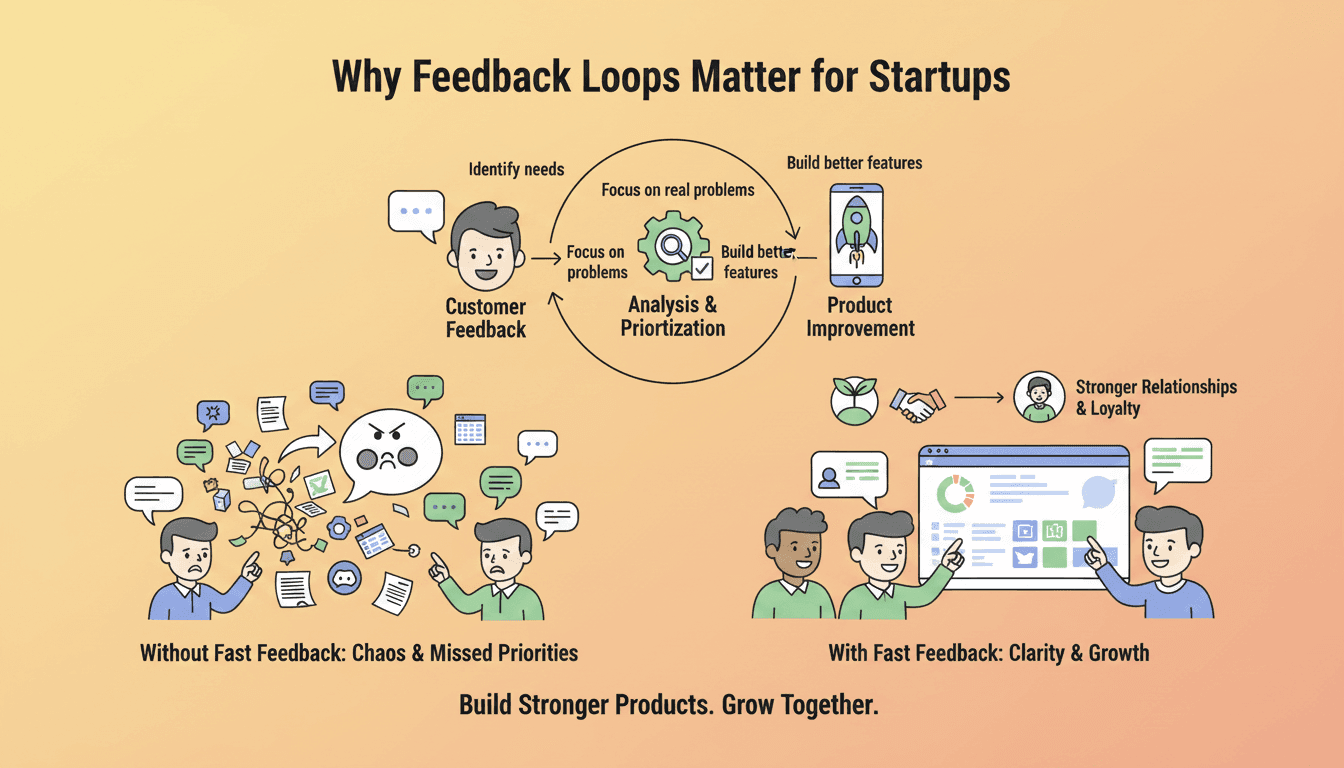
Why feedback loops matter for startups
Customer feedback loops are especially important for startups because small teams cannot afford to build the wrong features.
Poor organization often causes teams to react to the loudest users instead of the most important problems.
Fast feedback loops reduce this risk.
They help teams identify repeated requests, understand real customer pain points, and prioritize more effectively.
Instead of digging through Discord threads, spreadsheets, and email chains, teams can focus on improving the product itself.
When users see their feedback influencing product direction, they become more engaged and loyal.
This is why strong customer feedback loops are closely connected to product-led growth.
The goal is not simply collecting opinions.
The goal is building stronger relationships between products and users.
How FeedLog Improves Feedback Management
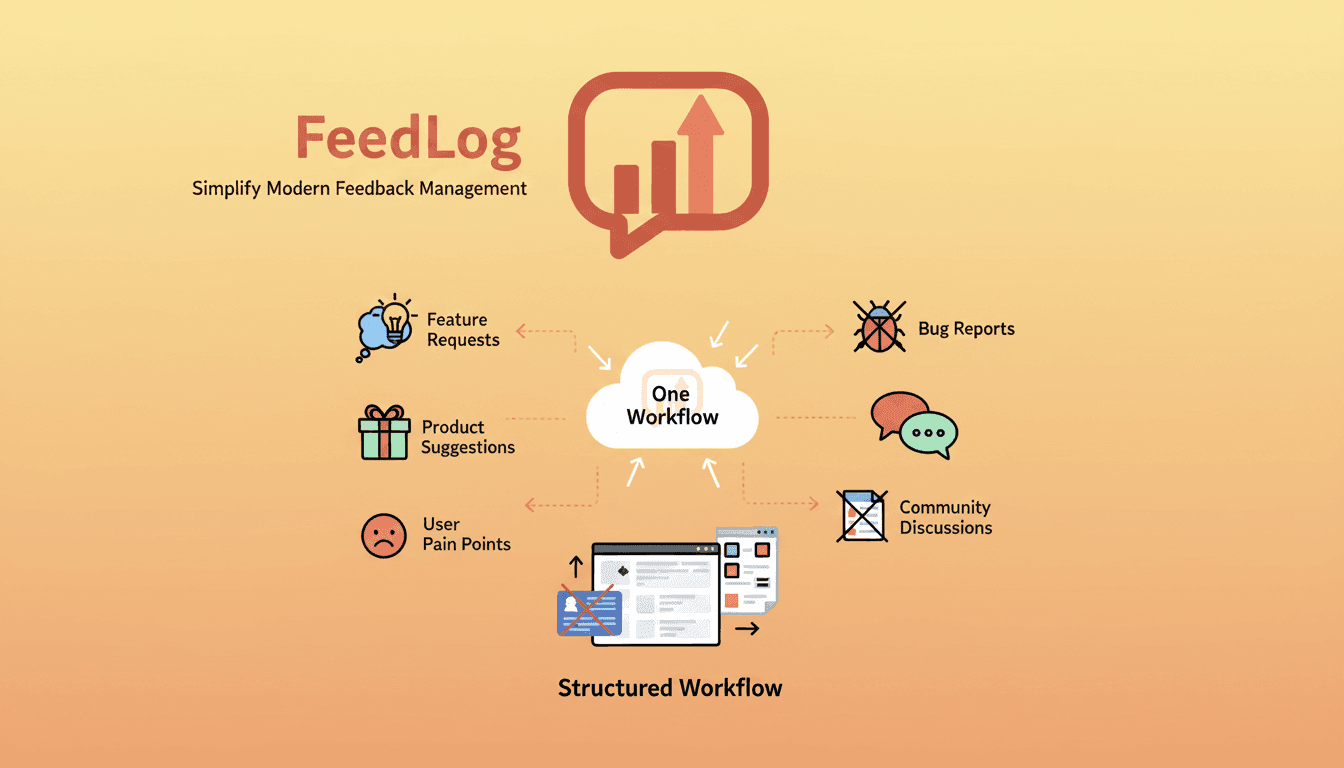
FeedLog was built to simplify modern feedback management for growing teams.
Instead of managing feedback across disconnected tools, FeedLog helps teams centralize everything into one workflow.
This creates better visibility across the entire process.
Teams can organize:
- Feature requests
- Product suggestions
- User pain points
- Bug reports
- Community discussions
Instead of losing context inside Discord threads or spreadsheets, teams can build a more structured workflow around customer insight.
AI-powered feedback management reduces manual work
One major challenge for growing teams is sorting large amounts of feedback manually.
As products grow, repetitive requests increase rapidly.
FeedLog uses AI to improve feedback management efficiency by helping teams:
- Categorize feedback
- Detect repeated requests
- Identify trends
- Organize user insights faster
This is especially useful for small startups without large operations teams.
Good feedback management should reduce operational chaos instead of creating more manual work.
Public roadmaps help close the feedback loop
Transparency is another important part of modern product development.
FeedLog helps teams share roadmap updates and feature progress publicly.
This helps create a stronger customer feedback loop because users can clearly see product progress.
Instead of wondering whether feedback disappeared forever, users can track updates directly.
This type of transparent feedback management improves trust between users and product teams.
Why Feedback Loops Matter More for Small Teams
Large companies can survive slow decisions. Small teams usually cannot.
For startups, every product decision matters. Building the wrong feature can waste weeks of work. Poor feedback management often causes teams to react to the loudest users instead of the most important problems.
This is why fast feedback loops matter.
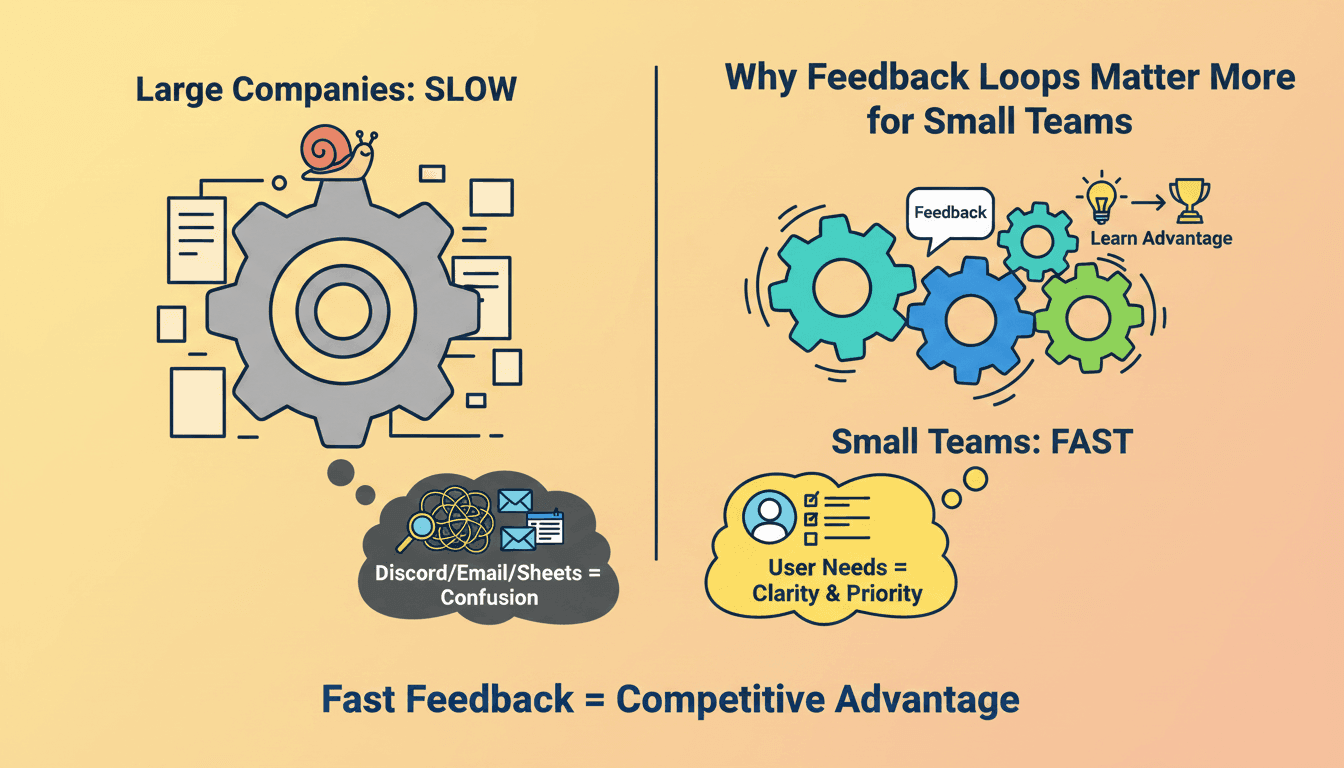
Good feedback management helps small teams quickly identify repeated requests, understand real user pain points, and prioritize smarter. Instead of searching through Discord threads, emails, and spreadsheets, teams can focus on improving the product.
Small teams do not need complicated enterprise systems. They need clear visibility into what users actually want.
Fast feedback loops help startups learn faster, avoid wasted work, and stay close to customer needs. In many cases, strong feedback management becomes a real competitive advantage.
Why Open Source Matters
Traditional platforms often become expensive very quickly.
Many startups end up paying large monthly fees long before achieving product-market fit.
For smaller teams, this creates unnecessary pressure.
FeedLog provides an open-source approach that helps reduce software costs while keeping workflows flexible.
This is especially useful for:
- Indie hackers
- Small SaaS startups
- Open-source projects
- Early-stage product teams
Open source also gives teams better ownership over infrastructure and customer data.
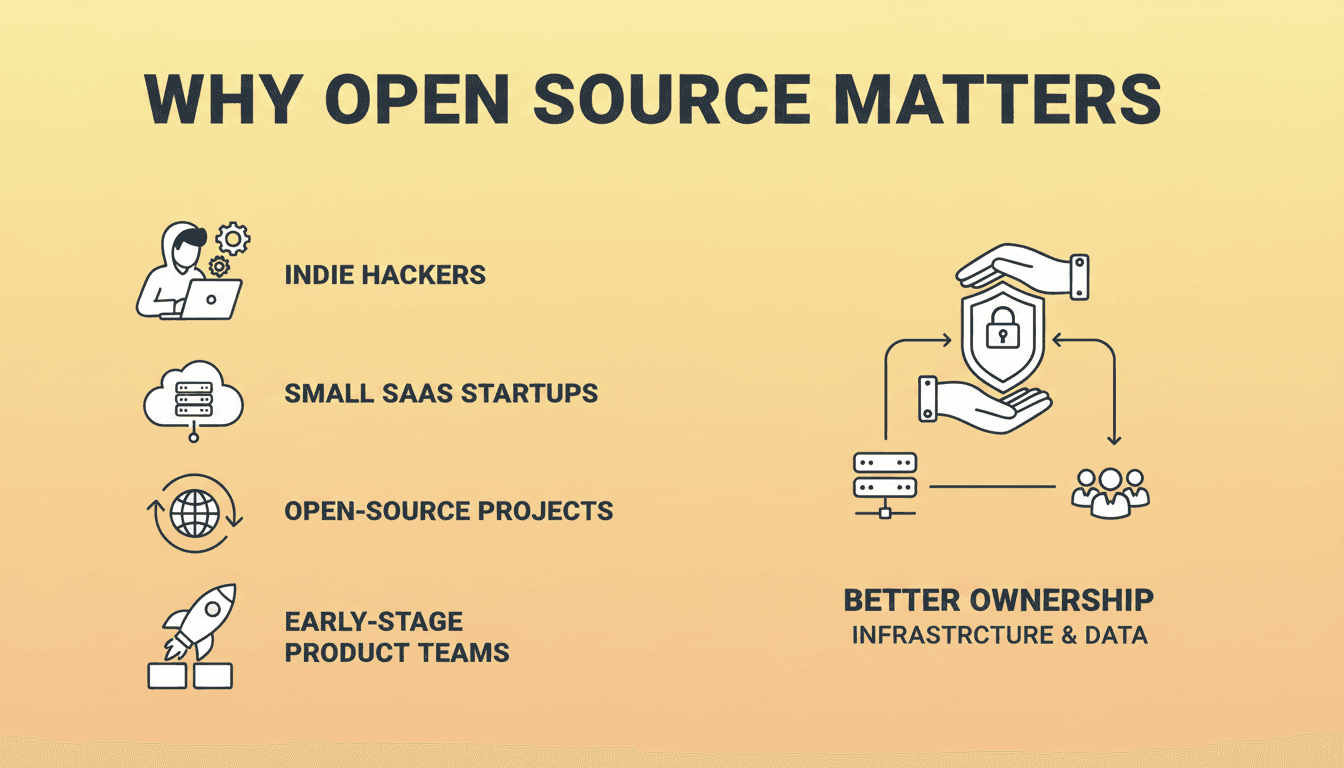
Instead of depending entirely on third-party platforms, teams can self-host and manage everything themselves.
For privacy-focused companies, this is becoming increasingly important.
Getting Started With FeedLog
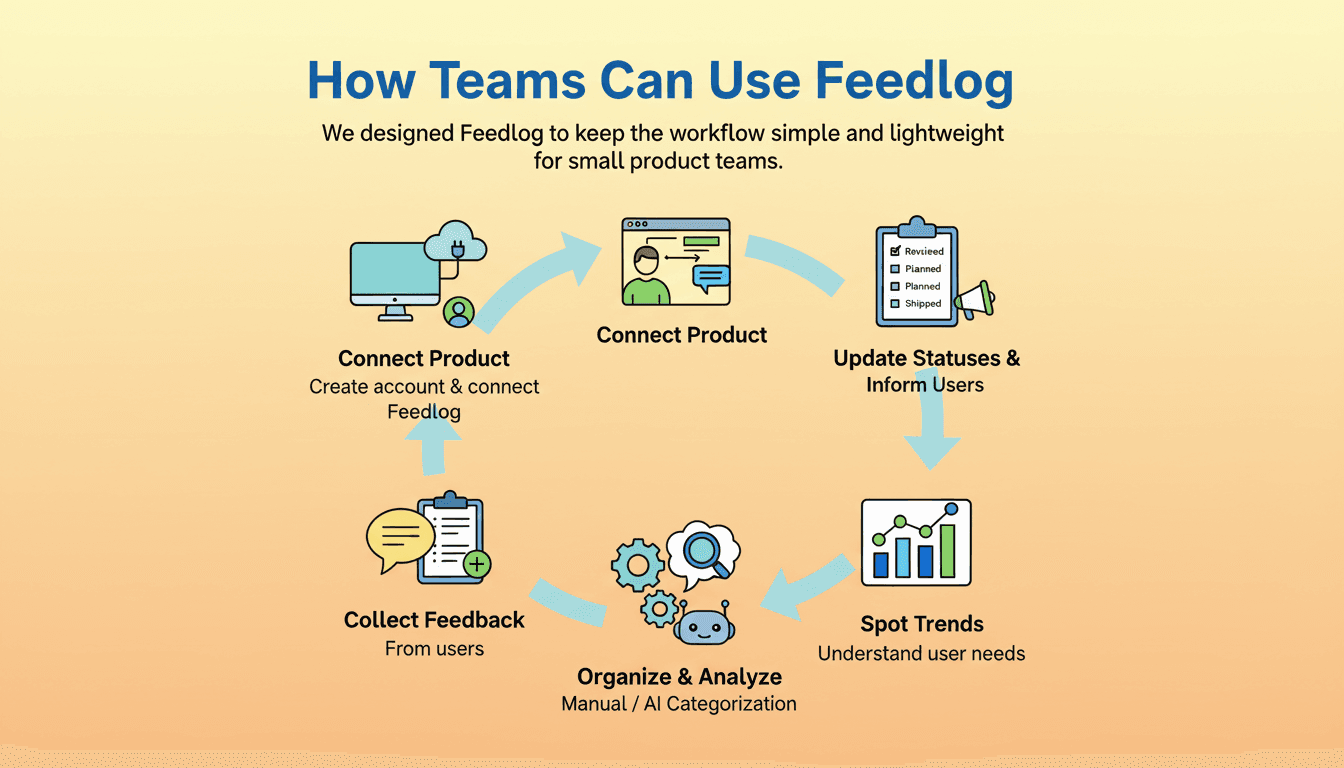
- Step 1: Use FeedLog
Teams can use FeedLog in two ways:
- Sign in directly – start using FeedLog without any deployment.
- Deploy from GitHub – teams can deploy FeedLog on lightweight platforms like Vercel or Cloudflare Workers to keep infrastructure costs low.
- Step 2: Centralize Feedback
Bring all feedback channels into one workflow.
Instead of searching across multiple platforms every day, teams can organize everything in one place.
- Step 3: Organize and Prioritize
Use AI-powered workflows to identify repeated requests, organize discussions, and prioritize product decisions faster.
- Step 4: Close the Loop
The final step is communication.
Update users regularly. Share roadmap progress. Show customers how their feedback influences product direction.
That is how modern startups build stronger customer relationships.
Conclusion
Poor workflows slow product growth.
Not because teams ignore users, but because valuable insights become scattered as products scale. Important discussions disappear inside Discord messages, emails, spreadsheets, and support conversations.
Modern teams need more than simple collection tools. They need faster feedback loops, clearer communication, and better ways to turn customer insight into product decisions.
FeedLog helps teams build lightweight, AI-powered, open-source workflows with lower costs, stronger data ownership, and faster customer feedback loops.
Great products are not built by guessing.
They are built through continuous learning, iteration, and close collaboration with users.