 Chloe HartLast Modified: May 19, 2026
Most Customer Feedback Tools Aren’t Built for Startups




A few months ago, we realized user feedback was starting to pile up everywhere.Bug reports in Discord. Feature requests through email. Product ideas hidden in X replies. Random screenshots without context. Important conversations buried inside Slack threads.At first, it felt like a good sign. People were actively using the product and sharing what they wanted.
But very quickly, feedback became hard to manage.Not because there wasn’t enough of it — but because we kept losing track of it.We tried spreadsheets, Notion, and several popular customer feedback tools. Most of them were packed with dashboards, analytics, voting systems, and complex workflows.
The problem was that they felt built for mature companies with dedicated support or customer success teams — not small product teams moving fast and figuring things out in real time.
What we actually needed was much simpler:A lightweight way to collect feedback, organize conversations, and stop important user insights from disappearing across different channels.And honestly, this problem feels bigger than ever for modern SaaS and AI products.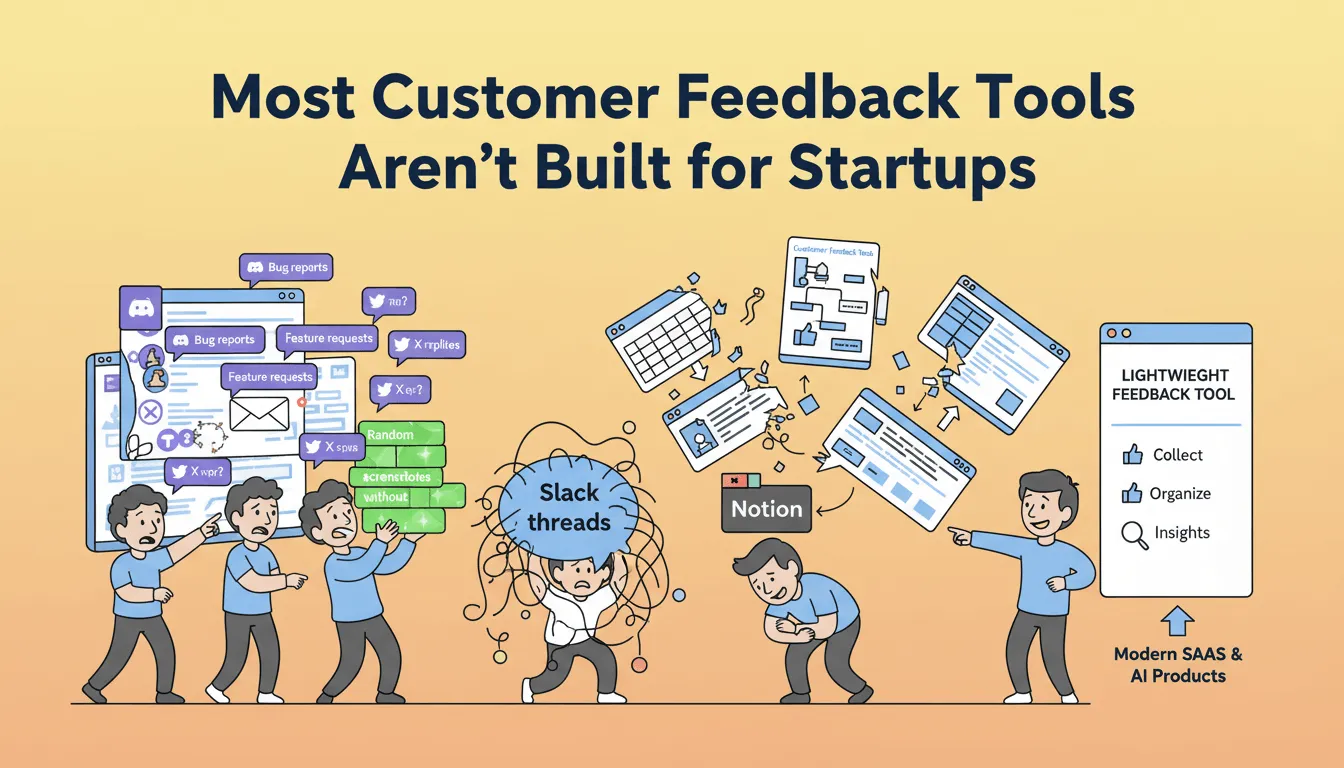
The Real Problem With Customer Feedback Today
Most customer feedback tools are built for companies that already have structured internal workflows. They assume there’s a support team managing tickets, a PM organizing requests, and a clear process for prioritization.
But early-stage startups usually don’t work like that.
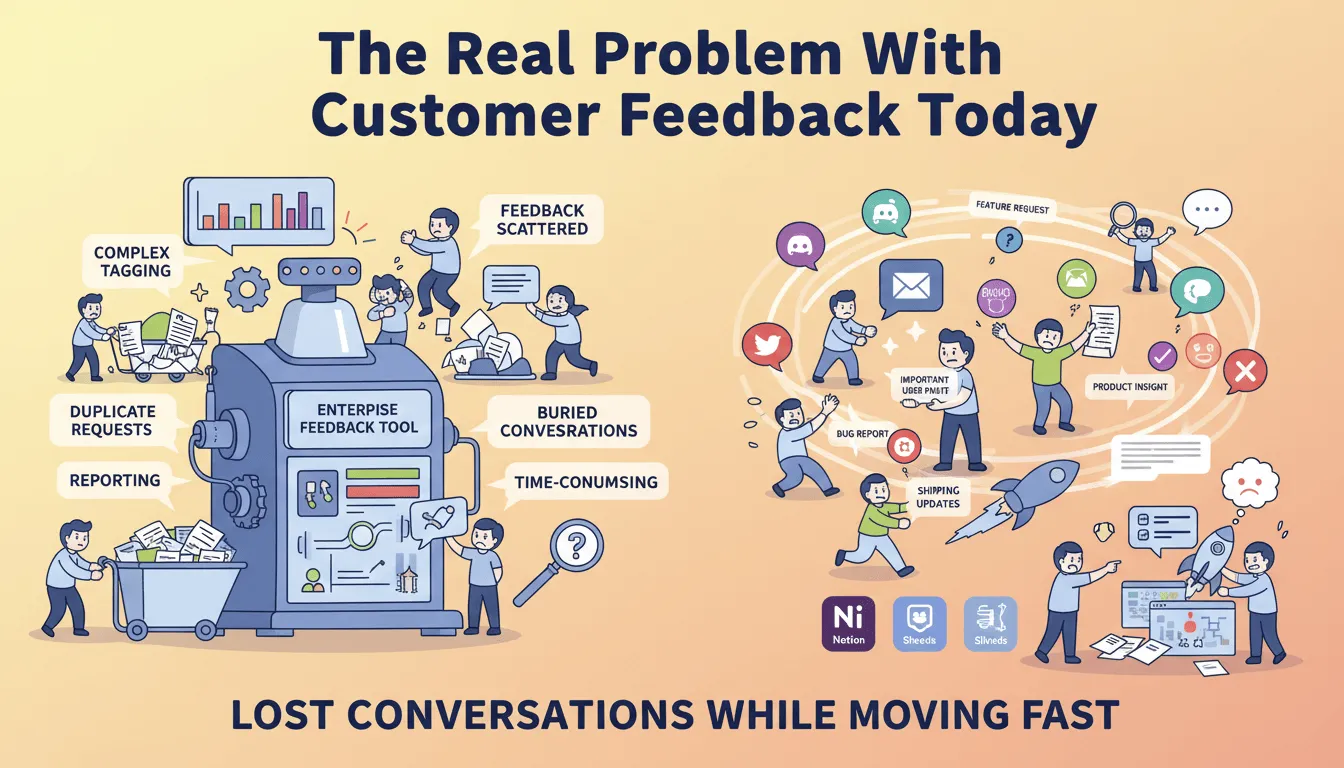
Especially in AI SaaS, feedback is messy, fast, and spread across different channels. A feature request might come from Discord, a bug report from email, and a valuable product insight from a random X reply. The real problem is no longer “how to collect feedback” — it’s how to avoid losing important conversations while moving fast.
Small product teams usually struggle with things like:
- Feedback scattered across Discord, Slack, email, X, and support chats
- Duplicate feature requests without clear organization
- Important user pain points getting buried inside conversations
- Spending more time managing feedback systems than actually shipping updates
- Users giving feedback but never hearing back again
This is where many traditional customer feedback tools start feeling too heavy.
A lot of platforms focus on dashboards, reporting, complex tagging systems, and enterprise workflows. Those features make sense for large organizations, but for smaller teams, they can create another layer of operational work instead of simplifying the process.
We noticed this ourselves while trying different tools. In many cases, organizing feedback became almost as time-consuming as building the product.
That’s why many startups eventually go back to Notion docs, spreadsheets, or Slack threads — not because dedicated feedback tools are bad, but because the workflow often feels disconnected from how fast modern product teams actually operate.
Most Feedback Platforms Were Built for Enterprise Teams
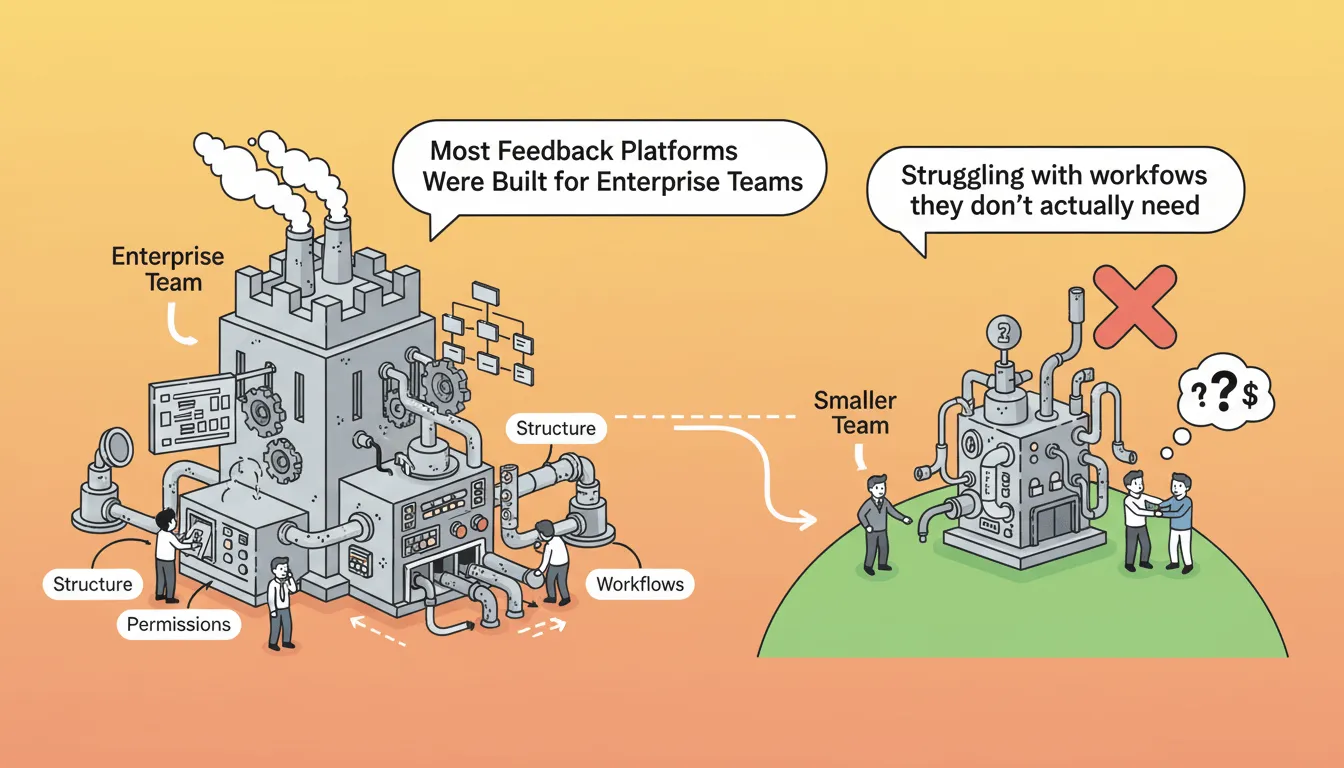
A lot of customer feedback tools and platforms were designed around how large companies operate.
That means these customer feedback tools focus heavily on structure, reporting, permissions, workflows, and internal coordination. For enterprise teams, that makes sense. When hundreds of support tickets, feature requests, and customer conversations are flowing in every day, companies need systems to organize everything at scale.
But the problem is that many smaller teams end up paying for — and struggling with — customer feedback tool workflows they don’t actually need.
Enterprise Teams Need Structure and Process
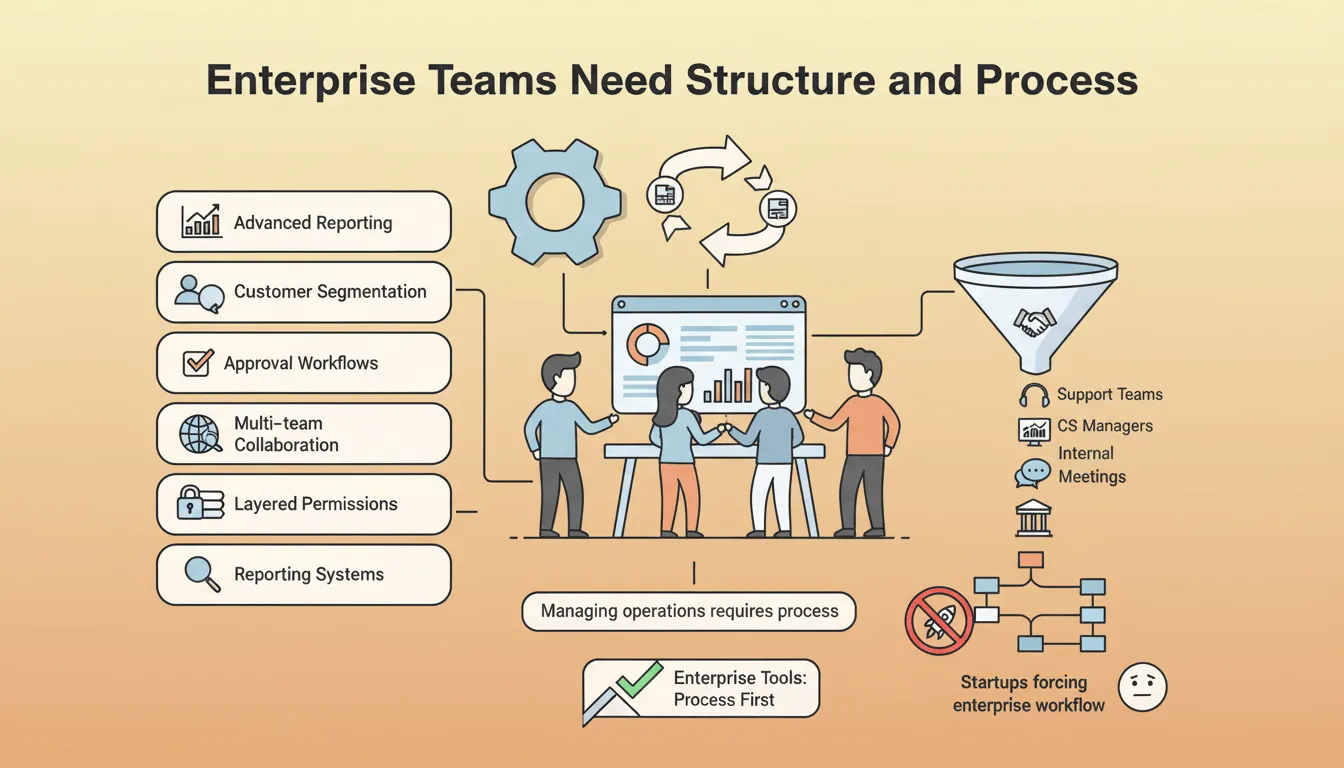
Large companies usually care about things like:
- advanced reporting
- customer segmentation
- approval workflows
- multi-team collaboration
- layered permissions
- detailed analytics
Because at that scale, feedback is less about “finding problems” and more about managing operations.
A product manager might never directly talk to users. Feedback passes through support teams, CS managers, dashboards, internal meetings, and reporting systems before anything gets built.
That’s why many enterprise feedback tools prioritize process first.
And honestly, there’s nothing wrong with that.
The issue starts when early-stage startups try to force themselves into the same workflow.
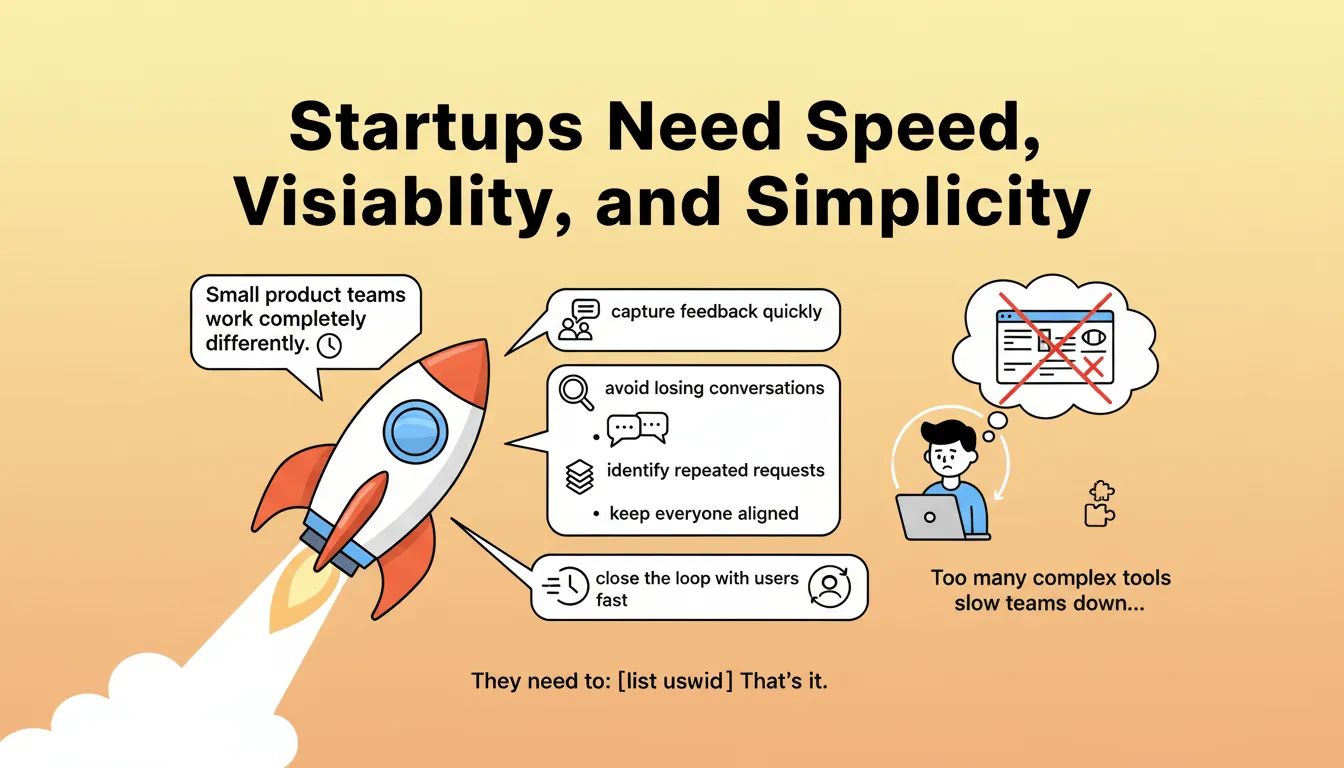
Startups Need Speed, Visibility, and Simplicity
Small product teams work completely differently.
Founders are still talking directly with users. Product decisions happen quickly. Priorities change every week. Most feedback comes from conversations, not formal surveys.
At this stage, teams usually don’t need another complex operational system.
They need to:
- capture feedback quickly
- avoid losing conversations
- identify repeated requests
- keep everyone aligned
- close the loop with users fast
The irony is that many customer feedback tools end up slowing small teams down. Instead of helping teams stay close to users, they introduce more dashboards, more organization work, and more process.
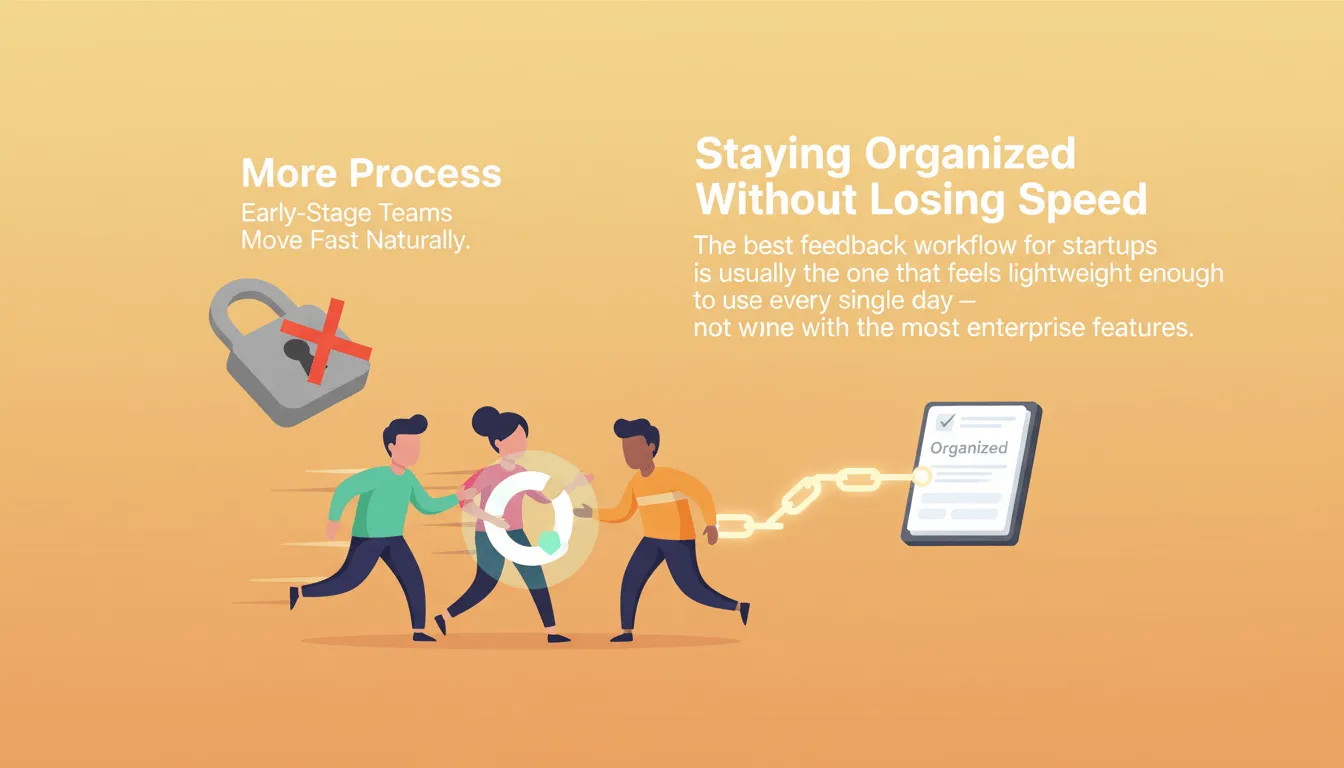
Early-Stage Teams Don’t Need More Process
Most early-stage teams already move fast naturally.
The real challenge isn’t “creating a feedback operation.”
It’s staying organized without losing speed.
The best feedback workflow for startups is usually the one that feels lightweight enough to use every single day — not the one with the most enterprise features.
Different Types of Customer Feedback Tools
One thing we noticed while researching customer feedback tools is that most platforms are designed for very different team workflows.
Some focus on surveys. Some focus on roadmap planning. Others are built around enterprise feedback operations. That’s why many startup teams end up adopting tools that technically solve feedback collection — but still feel too heavy during day-to-day product development.
Here’s a simple breakdown of some popular customer feedback tools and the workflows they fit best:
| Tool | Best For | Strength | Friction |
|---|---|---|---|
| Typeform | Surveys | Forms | Limited workflow |
| Canny | Roadmaps | Voting | Roadmap-heavy |
| Productboard | Product teams | Prioritization | Complex |
| Featurebase | Feedback hubs | All-in-one | Feature-heavy |
| UserVoice | Enterprise teams | Analytics | Operational overhead |
After trying different workflows, we realized most early-stage teams don’t actually need more layers of process.
They need a simpler way to collect feedback, identify patterns, and stay close to users while continuing to ship quickly.
A Better Feedback Workflow for Fast-Moving Teams
Most startups don’t have a feedback problem.
They have a workflow problem.
The issue usually isn’t getting user opinions — it’s keeping feedback organized enough to actually make good product decisions while moving fast.
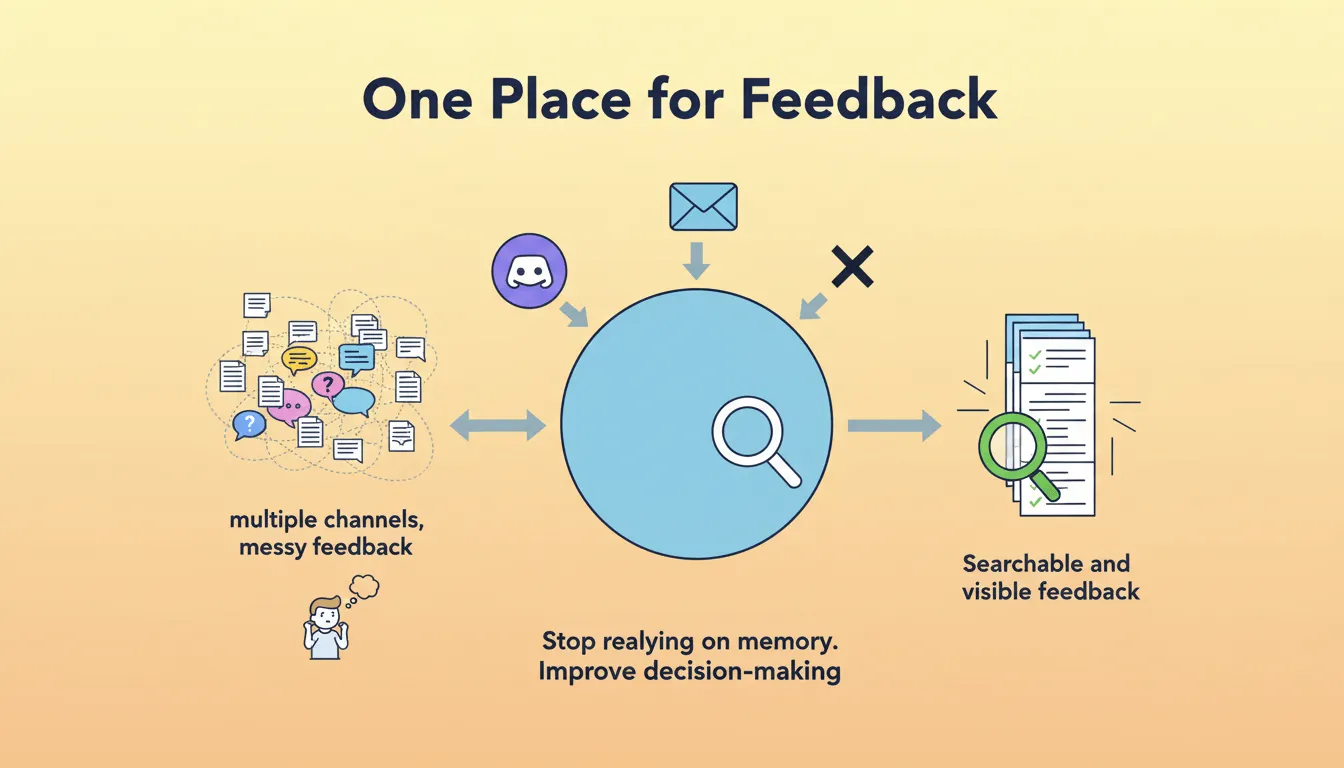
One Place for Feedback
When feedback comes from multiple channels, things get messy very quickly.
A feature request appears in Discord. A customer replies to an email with the same problem. Someone mentions a bug under an X post. A few days later, nobody remembers where the original conversation happened.
This is why small teams need a customer feedback tool that keeps feedback in one place.
Not a massive enterprise system. Just a simple customer feedback tool where product conversations stop disappearing.
Because once feedback becomes searchable and visible, teams stop relying on memory.And honestly, that alone already improves decision-making more than most complicated customer feedback tools and dashboards do.
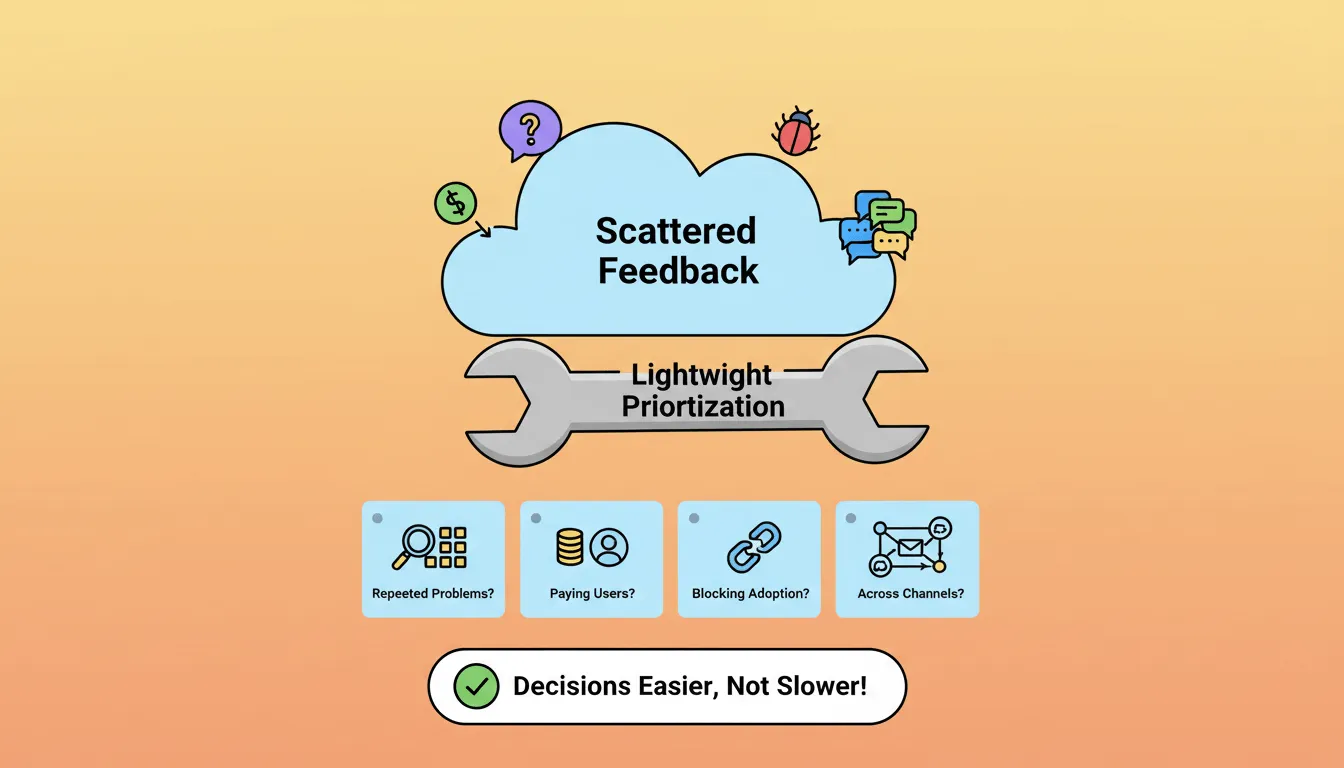
Lightweight Prioritization
One customer asks for a new integration. Another reports onboarding issues. Meanwhile, Discord conversations and feature requests keep piling up inside different customer feedback tools and channels.
Without lightweight prioritization, teams start reacting instead of deciding.
The loudest request gets attention first. The most recent conversation feels most urgent.
We noticed this ourselves while building Feedlog. Sometimes one passionate user made a feature feel critical, but after organizing feedback through a customer feedback tool, we realized smaller repeated complaints were actually affecting far more people.
That’s the real problem with scattered feedback:
it becomes very hard to spot patterns.
But early-stage teams usually don’t need more process.
They just need enough structure to answer simple questions clearly:
- What problems appear repeatedly?
- Which requests come from paying users?
- What issues are blocking adoption most often?
- What feedback keeps showing up across different channels?
Good prioritization should make decisions easier, not slower.
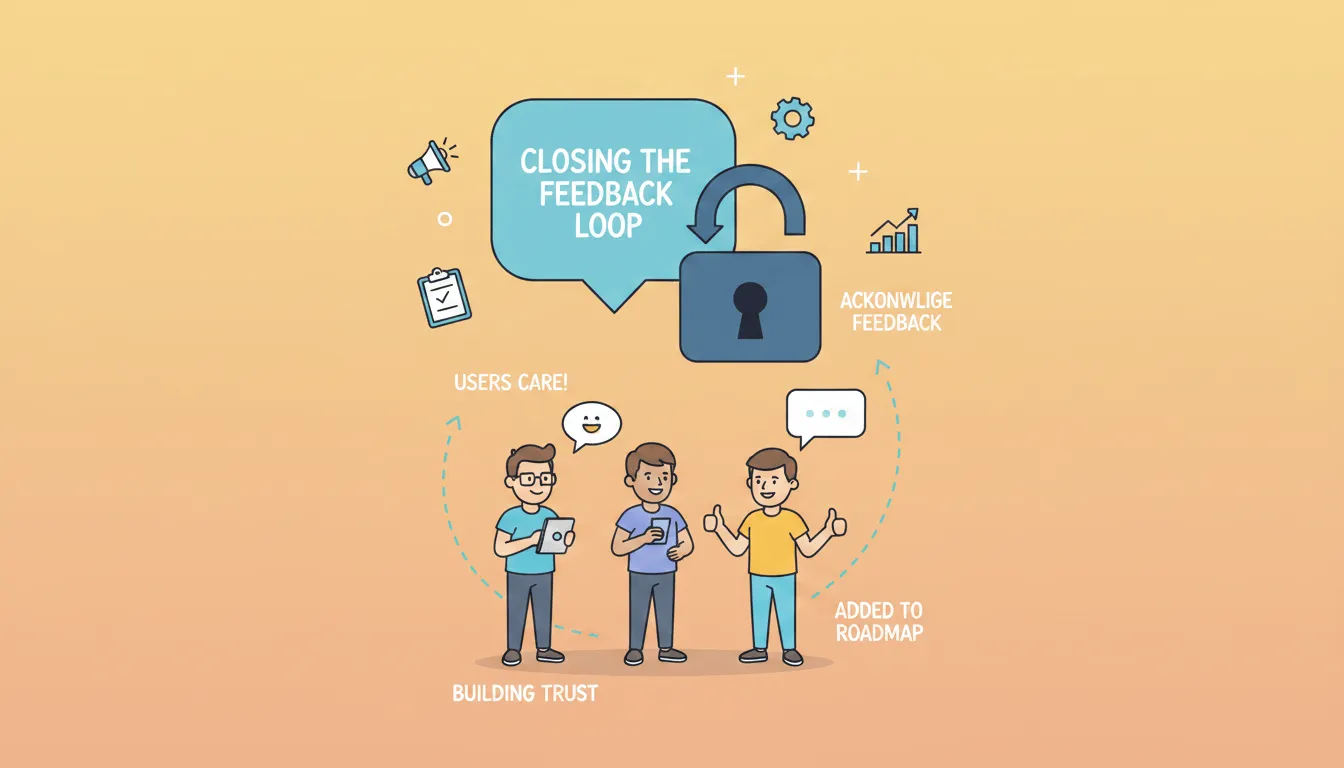
Closing the Feedback Loop
One thing small teams often underestimate is how much users care about being acknowledged.
Most people don’t expect every feature request to get built immediately. But they do want to know their feedback reached a real person.
Even small updates matter.
Something as simple as:
“We saw this and added it to our roadmap.”
already creates trust.
Especially for startups.
Early users usually join because they want to support fast-moving products. They enjoy feeling close to the building process. But when feedback disappears into silence, people slowly stop sharing useful insights altogether.
And that’s dangerous, because the best product feedback usually comes from highly engaged early users — the exact people startups can’t afford to lose.
Why We Built Feedlog
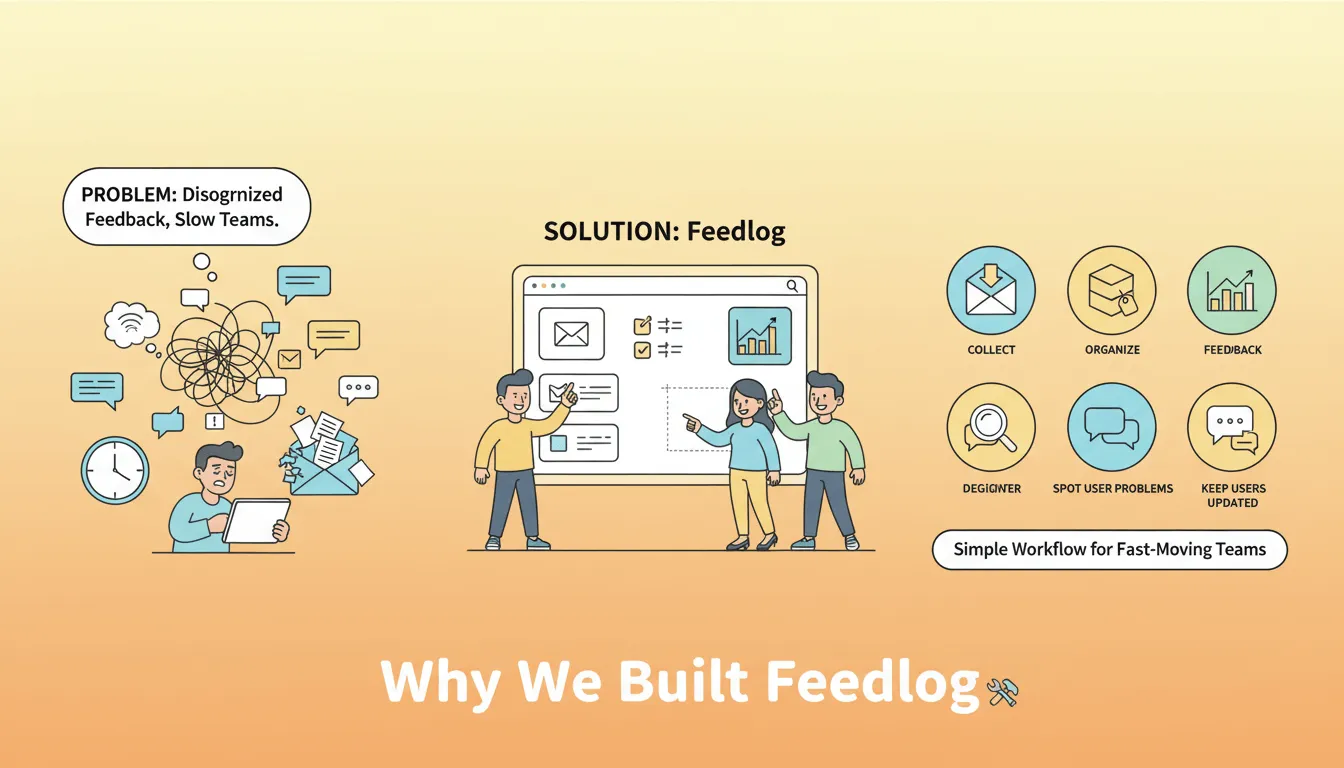
After trying different workflows and customer feedback tools, we realized our biggest problem wasn’t collecting feedback. It was staying organized without slowing the team down.
Most customer feedback tools we tested felt designed for mature companies with dedicated support teams, complex reporting workflows, and structured internal processes. But early-stage startups usually work much more directly.
In modern product teams, customer feedback often comes from conversations. Priorities change fast, and product decisions happen in real time.
We didn’t want another system that required more management than the feedback itself. We wanted something lightweight enough for small teams, but structured enough to stop feedback from getting lost.
That idea eventually became Feedlog.
Not as a massive enterprise feedback platform, but as a simpler workflow for fast-moving product teams:
- collect feedback in one place
- organize requests without heavy process
- spot repeated user problems
- keep users updated
Because for early-stage teams, the challenge usually isn’t a lack of feedback.It’s keeping product conversations organized enough to understand what users actually need — without slowing down the speed of building.
How Teams Can Use Feedlog
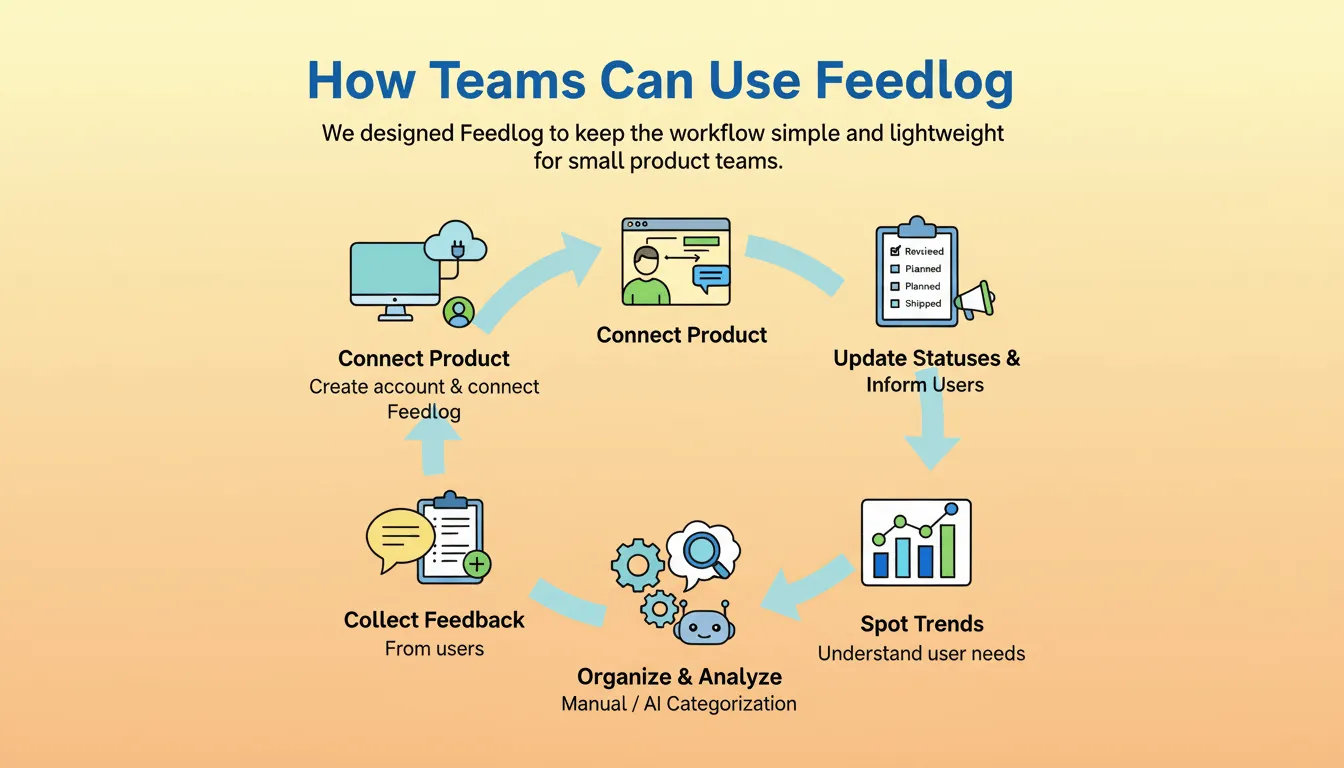
We designed Feedlog to keep the workflow simple and lightweight for small product teams.
The process usually looks like this:
- Create an account and connect Feedlog to your product
- Start collecting feedback from users through your feedback board or widget
- Organize requests manually or use AI to help categorize and summarize feedback
- Spot repeated problems and understand what users care about most
- Update statuses so users can see whether feedback is being reviewed, planned, or shipped.
Instead of spending hours manually sorting conversations, AI can help teams quickly identify repeated requests, group similar problems together, and surface the feedback patterns that matter most. This makes collecting customer feedback much easier to manage as products and user conversations continue growing.
- Spot repeated problems and understand what users care about most
- Update statuses so users can see whether feedback is being reviewed, planned, or shipped
Conclusion
Customer feedback tools shouldn’t make product teams slower. Especially for startups.
Most early-stage teams don’t need complicated workflows, endless dashboards, or layers of process for collecting customer feedback. They need a simple way to stay organized, understand user problems clearly, and keep feedback connected to real product decisions.
Because when collecting customer feedback becomes scattered across different channels, teams stop seeing patterns. Important conversations disappear. Product decisions become reactive instead of intentional.
That’s ultimately what pushed us to build Feedlog.